

What Scale Without Chaos Actually Means
For a growth-focused owner, the goal is rarely growth at any cost. You want more revenue, better-fit customers, stronger margins, and a business that does not need you involved in every decision. That is what it means to scale without chaos. Growth should increase the capacity and value of the business, not simply increase the number of problems landing on the owner's desk.
Foundation First. Build Properly. Scale Predictably.
The problem is that many owner-led businesses reach a point where growth starts exposing weaknesses that were manageable at a smaller size. Leads come in, but follow-up is inconsistent. Marketing generates attention, but the website does not convert it well. Sales opportunities sit in inboxes. Reporting is unclear. Staff rely on the owner for answers.
When those issues compound, growth starts creating more workload instead of more capacity.
That is not necessarily a traffic problem. It is often a system problem.
For growth-focused established businesses, the real challenge is usually not a lack of activity. It is that the brand, customer journey, follow-up, reporting, and operations are no longer working together well enough to support the next stage of growth.
Growth Can Expose Weak Systems
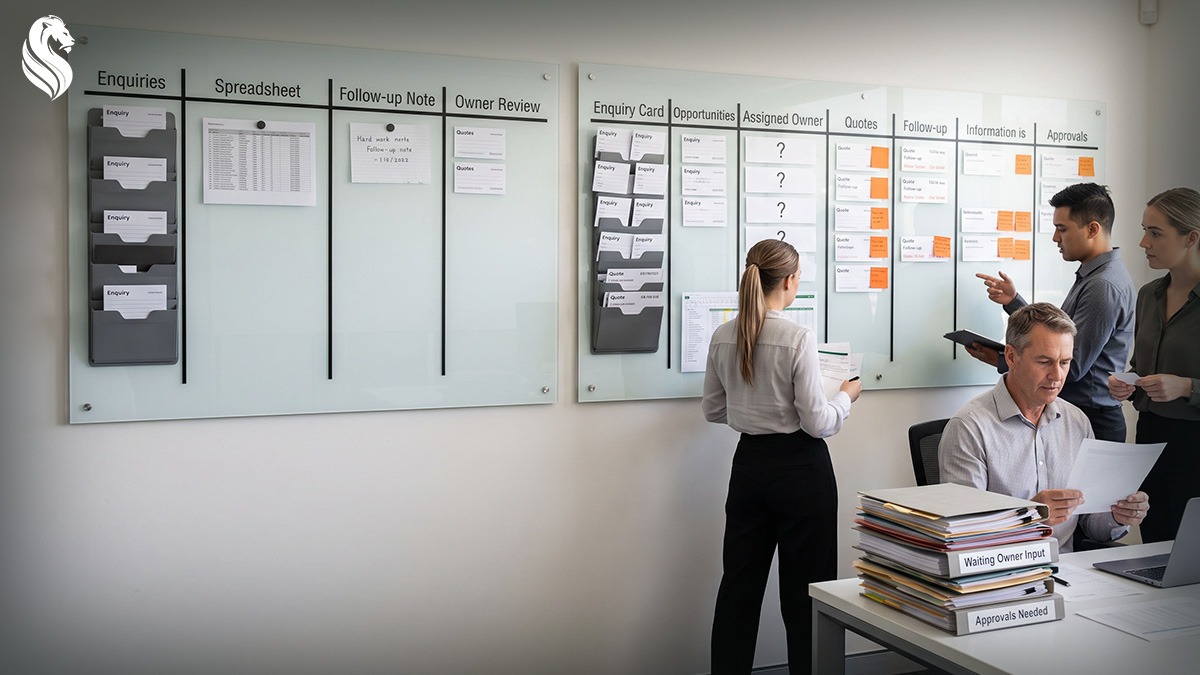
It is easy to blame growth itself when a business becomes difficult to manage.
More revenue creates more pressure across sales, service, communication, reporting, and delivery. But that pressure usually exposes weaknesses that were already there.
A sales process that worked when the owner personally handled ten enquiries may struggle when the business receives fifty. A spreadsheet that felt manageable at one level of revenue can become unreliable when several people need to use it. Informal customer follow-up can work while the owner remembers every conversation, but it becomes risky once multiple staff members are involved.
Growth increases volume. It also exposes friction.
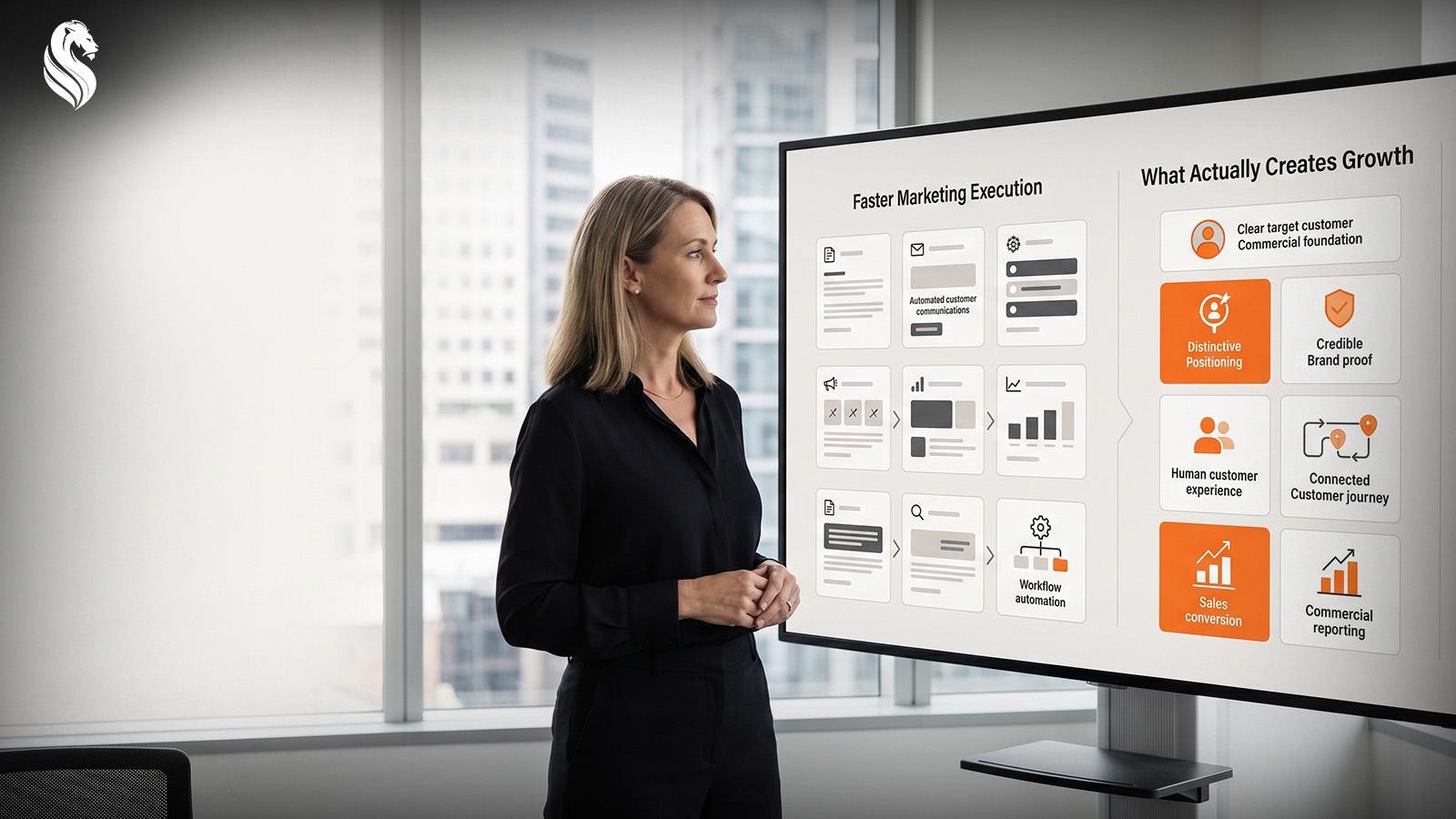
This is why adding more marketing to an already strained business can make the underlying problem worse. Wandering Lion's core belief is that ads amplify clarity. They do not create it. If the offer, positioning, website, customer journey, sales process, or reporting system is weak, increasing demand can simply make that weakness more expensive.
The goal is not to slow growth down.
The goal is to make sure the business can absorb it.
What Scale Without Chaos Actually Looks Like
A business that scales well can handle more of the right work without creating the same increase in owner involvement, admin, uncertainty, or operational strain.
It does not need to be perfectly automated or free from pressure. Growth still creates challenges.
The difference is that the business has enough structure to deal with those challenges without constantly returning control to the owner.
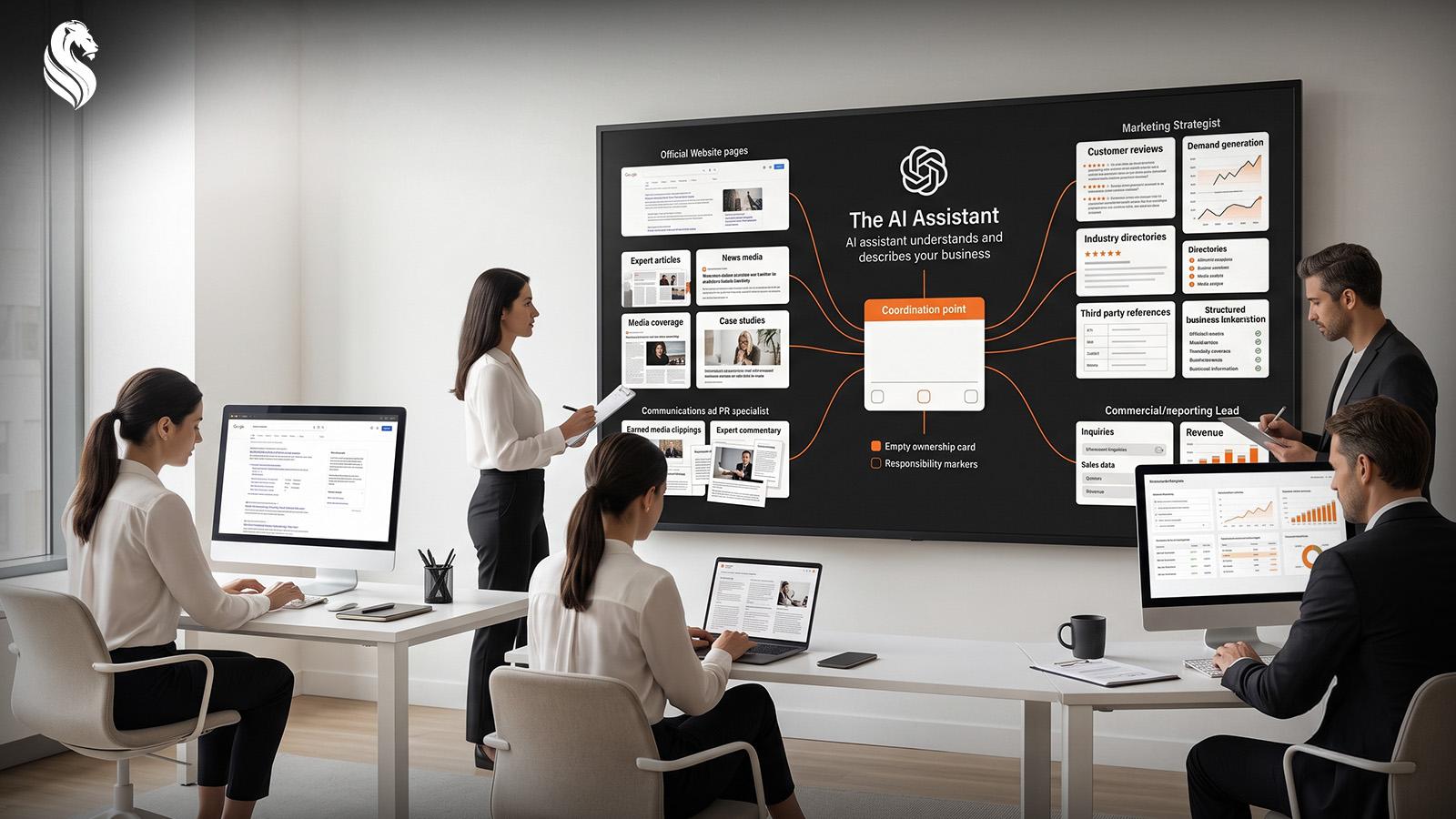
In practice, the system should connect four things. The market needs to understand the offer, enquiries need a clear path into the business, sales opportunities need consistent follow-up, and management needs enough visibility to make good decisions.
The brand helps the right customers understand the business quickly.
The website, landing pages, and lead capture then turn that interest into relevant enquiries.
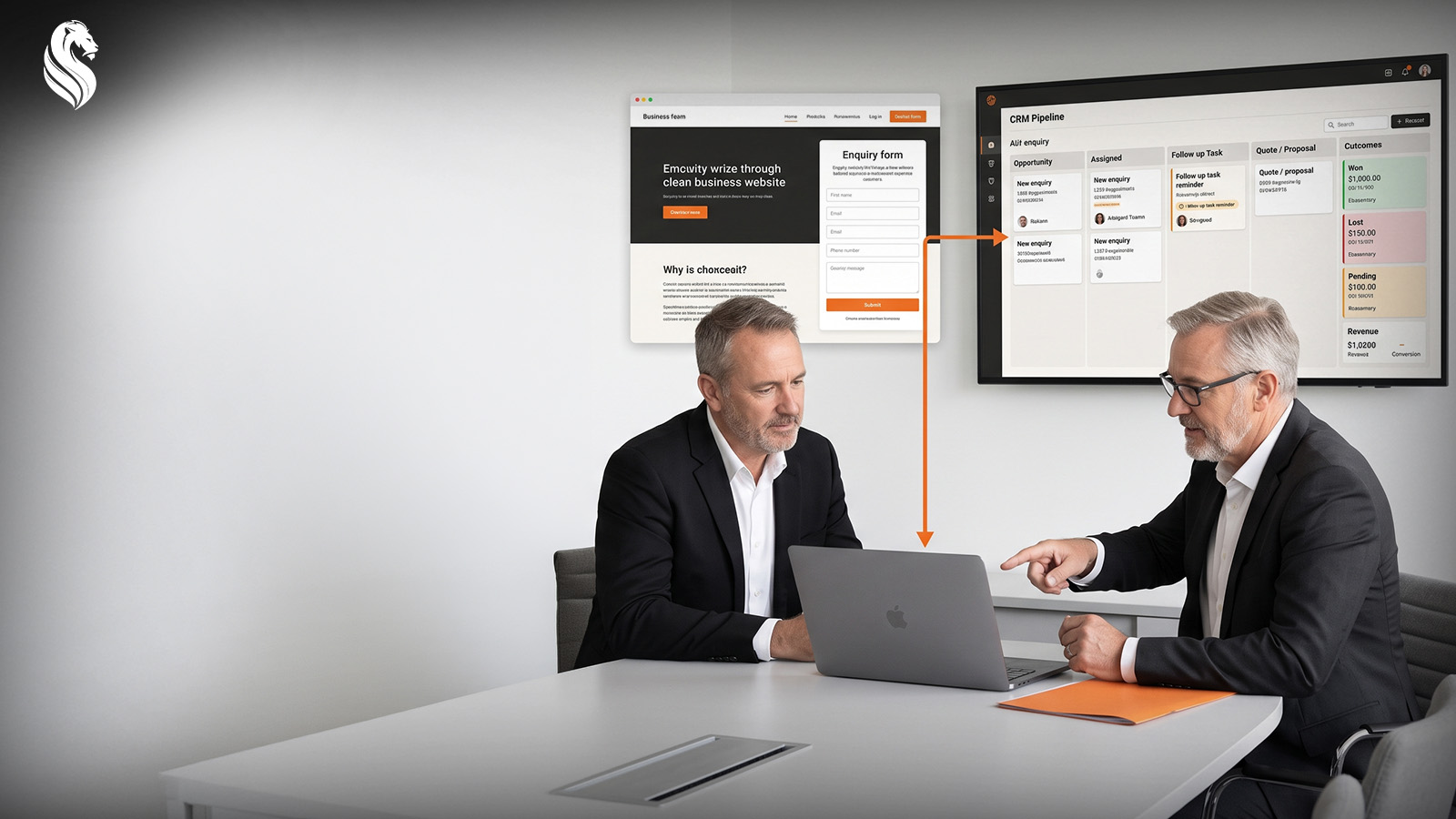
CRM discipline and sales follow-up give every opportunity a clear owner, next step, and outcome.
Reporting and operations provide visibility after the enquiry so growth does not depend on memory or constant intervention from the owner.
Marketing then feeds demand into a system that is prepared to handle it.
That is much closer to scalable growth than simply increasing lead volume.
Foundation First Means Finding the Real Constraint
When growth slows or becomes uncomfortable, owners often see the most visible symptom first.
They may assume they need more leads, stronger advertising, a new website, or better sales performance.
Any of those things could be true. But acting on the symptom before identifying the constraint creates the risk of fixing the wrong problem.
A stronger starting point is to audit the full commercial system.
That includes areas such as:
- Brand positioning
- Offer clarity
- Existing customers and revenue streams
- Website structure
- Customer journey
- Lead capture
- Sales process
- Follow-up
- CRM usage
- Reporting
- Internal handover
- Owner workload
- Marketing channels
- Automation
The purpose is not to produce a long list of faults. It is to identify where growth is being restricted or wasted.
For example, a business may believe it has a lead generation problem when it actually has a follow-up problem. Another may be driving reasonable website traffic but losing enquiries because the site does not communicate trust or relevance clearly enough.
A third may be generating strong enquiry volume but attracting the wrong type of work because its positioning is too broad.
The commercial question is always more useful than the marketing question.
Where is the business losing momentum, margin, time, or opportunity?
That answer tells you what needs to be fixed first.
Build Properly Means Connecting The Customer Journey
Once the real constraints are clear, the next step is not to add as much technology or marketing as possible.
It is to build the right system around how customers actually move through the business.
Wandering Lion's governing customer journey moves an owner from confusion to clarity, then into a system, growth, and ultimately partnership. The commercial logic behind that model is equally useful inside the client's own business. Each stage should connect to the next rather than operating as a collection of separate activities.
Consider a typical enquiry.
A potential customer discovers the business, visits the website, decides whether it appears relevant and credible, makes an enquiry, speaks with someone, receives a quote or proposal, and moves through follow-up until the opportunity either progresses, stalls, or closes.
Each stage affects the commercial return of the stage before it.
If marketing produces a strong lead but nobody follows up quickly, the problem is not marketing.
If a salesperson has a good conversation but the quote disappears into an unmanaged inbox, the business has a process problem.
If the business closes work but nobody can explain which channels produced profitable customers, there is a reporting problem.
Scaling properly means improving the entire chain.
Sales Follow-Up Is Part of The Growth System
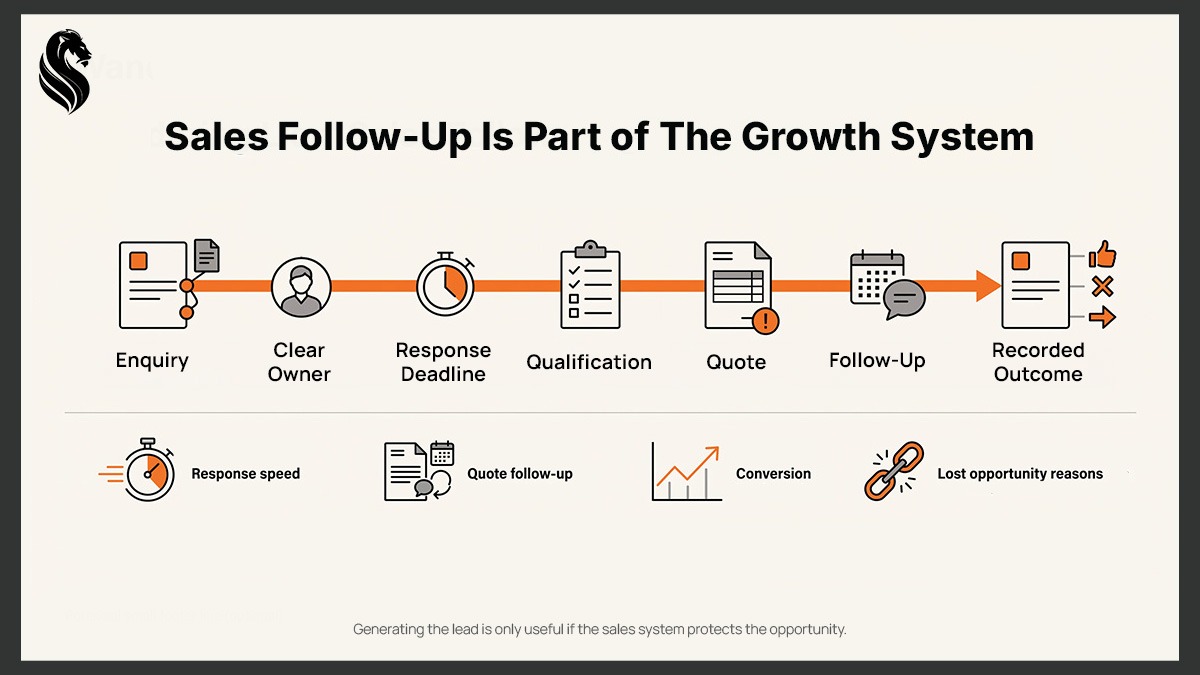
This is one of the most overlooked areas in owner-led businesses.
Many companies invest significant energy in generating enquiries but apply much less discipline to what happens after the enquiry arrives.
That creates a major disconnect.
The owner may hear that lead generation needs improvement when the real commercial leakage is happening later.
Poor follow-up does more than create an untidy pipeline. It means acquisition spend can be wasted, quotes can go cold, good-fit prospects can disappear, and the owner often ends up stepping back in to recover opportunities manually.
A scalable sales follow-up process should make several things clear.
- Who receives the enquiry
- How quickly it should be contacted
- What information is recorded
- What the next action is
- When a quote should be sent
- How quotes are tracked
- When follow-up occurs
- How lost opportunities are reviewed
This does not require a complicated enterprise sales system.
It requires visibility and consistency.
The Wandering Lion customer journey treats sales handover and close-out as a critical stage because many providers stop at lead generation. The commercial outcome depends on what happens between enquiry and completed sale, not simply how many leads enter the system.
For an owner trying to scale without chaos, this matters because better sales discipline reduces the need to personally chase every opportunity.
Reporting Should Reduce Uncertainty
Poor reporting creates a particular kind of workload.
It forces the owner to investigate.
You ask what happened with the leads, whether quotes were followed up, and why more enquiries have not translated into more revenue.
When the answers are scattered across different platforms, spreadsheets, inboxes, and suppliers, the owner becomes the reporting system.
That is not scalable.
Good reporting should help answer practical commercial questions.
What happened.
What changed.
What needs attention.
What should happen next.
Why that recommendation makes commercial sense.
This is also why vanity metrics are rarely enough. Impressions, clicks, reach, and traffic can be useful diagnostic measures, but they do not tell the owner whether the business is becoming healthier.
Depending on the business, stronger measures may include:
- Lead quality
- Enquiry volume
- Conversion rate
- Quote rate
- Sales outcomes
- Cost per qualified lead
- Revenue connected to identifiable marketing and sales activity
- Follow-up speed
- Customer journey performance
- Wasted spend reduction
- Owner workload reduction
Wandering Lion positions weekly updates and monthly reporting as part of the trust system rather than administrative extras. The purpose is to make commercial performance easier to understand and decisions easier to make.
Owner Dependency Is a Scaling Constraint
One of the clearest signs that growth is becoming chaotic is when almost every important process still depends on the owner.
The real issue is not simply that the owner is busy. It is that too much decision-making, commercial knowledge, and process control sits with one person.
- The owner approves the marketing.
- The owner remembers the key sales opportunities.
- The owner solves customer issues.
- The owner checks whether quotes have gone out.
- The owner explains what should happen next.
- The owner knows which customers are profitable.
- The owner fills the gaps whenever the system fails.
That may work for a long time. It can even help the business grow initially because the owner's judgment, relationships, and standards are often what created the success.
But eventually the same strength becomes a constraint.
If more revenue automatically creates more decisions for the owner, the business is increasing workload faster than it is increasing capacity.
Reducing owner dependency does not mean removing the owner from the business.
It means separating the work that genuinely requires owner judgment from routine decisions and information that should already be built into the system.
A clear customer journey, disciplined CRM, structured sales handover, useful reporting, documented responsibilities, and sensible automation all help move knowledge out of the owner's head and into the business.
That is one of the practical differences between getting bigger and genuinely scaling.
Scale Predictably Only After The System Is Ready
Once the foundations have been reviewed and the key systems are working, marketing becomes much more useful.
The business should be able to show that enquiries reach the right people, follow-up happens consistently, sales outcomes are visible, reporting supports decisions, and added demand will not simply create another layer of owner intervention.
Only then does increasing demand become the logical next step.
Paid advertising can drive traffic into relevant landing pages. SEO can attract people into a website that communicates the offer clearly. Content can reinforce positioning. Retargeting, automation, case studies, partnerships, and referral systems can support further growth.
The difference is sequence.
You are no longer adding activity in the hope that more volume fixes the business.
You are scaling something that has already been made clearer, stronger, and easier to measure.
This protects both revenue and workload.
It also makes optimisation more meaningful. If results change, the business has enough visibility to investigate where the issue is occurring rather than guessing.
That is predictable scale.
Not perfect certainty.
Better control.
The Warning Signs That Growth Is Becoming Messy
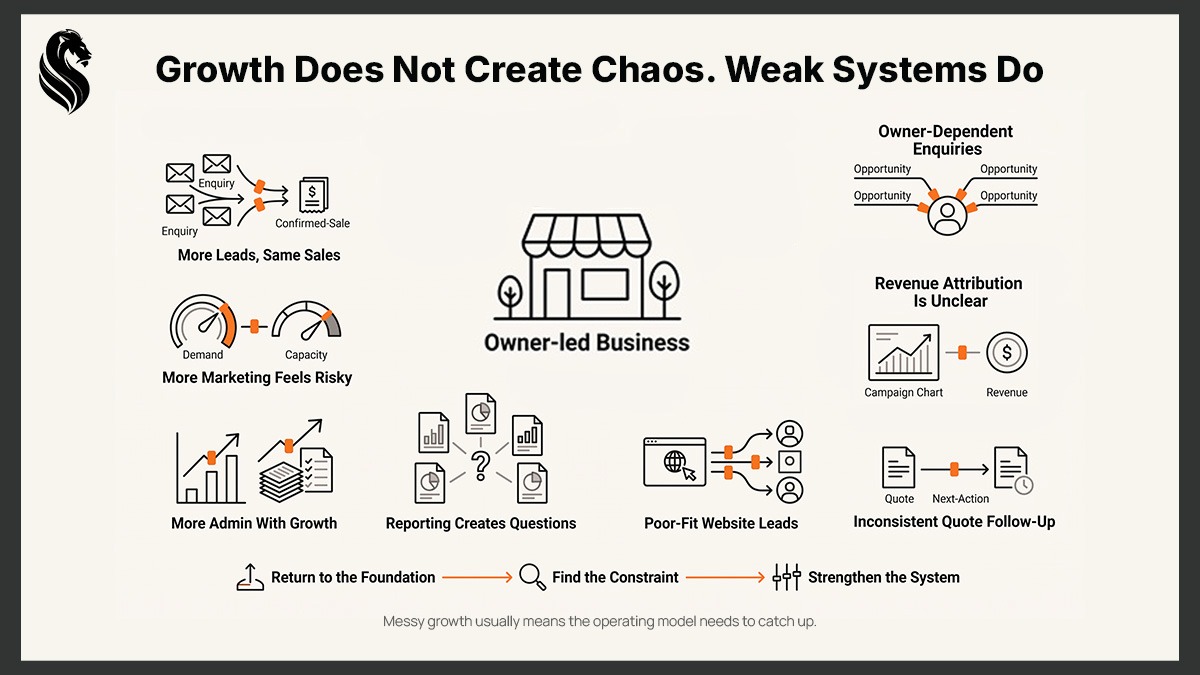
Owners do not need to wait until the business is overwhelmed before reviewing the system.
Several warning signs often appear earlier.
You may be ready for a foundation review if:
- Lead volume is increasing, but sales are not following
- Marketing performance is difficult to connect to revenue
- Too many enquiries depend on the owner personally
- Quotes are sent, but follow-up is inconsistent. The website gets traffic but produces weak-fit enquiries
- Reporting creates more questions than answers
- Growth creates noticeably more admin
- New marketing activity feels risky because the current system already feels stretched
None of these automatically mean the business is failing.
They usually mean the operating model that supported the previous stage of growth needs to catch up with the next one.
That is the point to return to the foundation, review the customer journey, sales process, reporting, and owner dependencies, and identify the constraint before adding more activity.
Growth Should Make The Business Stronger
Scaling without chaos is not about removing every complication from an owner-led business.
It is about making growth more deliberate.
The sequence matters because each stage protects the next.
Foundation First.
Identify the real commercial constraint before increasing activity.
Build Properly.
Connect the brand, website, customer journey, lead capture, sales follow-up, reporting, and operations.
Scale Predictably.
Increase demand once the business can convert, track, deliver, and learn from that demand.
When those three stages are working together, growth can increase revenue and capacity without automatically increasing uncertainty or owner workload.
That approach changes the question owners ask.
Instead of asking, How do we get more leads?
The better question becomes, What system needs to be in place so more of the right work creates revenue without creating more dependence on me?
That is the real meaning of scale without chaos.
Build The System Before You Add More Pressure
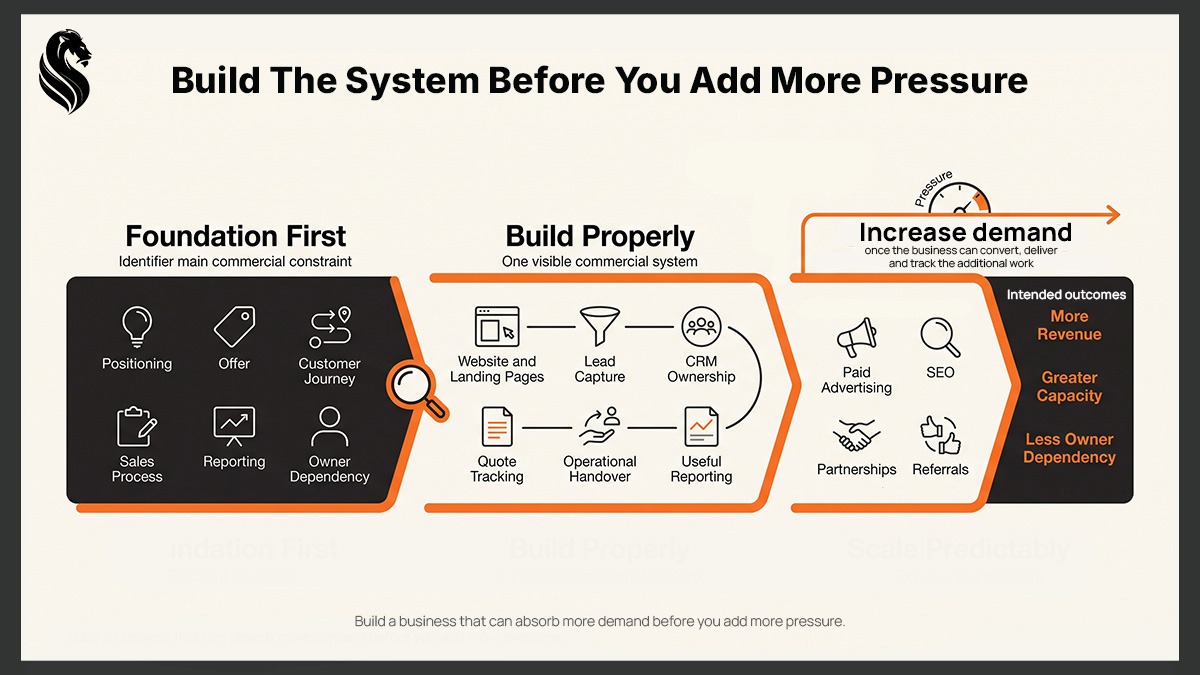
If growth is creating more workload, weaker visibility, inconsistent follow-up, or greater dependence on the owner, the next decision should be to identify the constraint before spending more on growth activity.
A growing owner-led business does not usually need more disconnected activity. It needs a clearer view of what is slowing growth down, where opportunities are being lost, and which systems need to be strengthened before more demand is added.
Wandering Lion was built around that principle. The model starts with diagnosis, moves into building the commercial system properly, and only then increases growth activity.
For a business in this position, a Growth Audit is the logical first step. It should review the foundations, customer journey, sales follow-up, reporting, and owner dependencies so the business can see what needs to be fixed, in what order, and why before more pressure is added.
FAQs
How do I know if my business is ready to scale?
A business is more likely to be ready when it can consistently handle enquiries, sales follow-up, delivery, and reporting without relying on informal processes or constant owner intervention. Readiness is less about reaching a particular revenue number and more about whether the underlying systems can support additional volume.
Do I need sophisticated software before I scale?
Not necessarily. Better software does not fix an unclear process. Start by defining what needs to happen, who owns each step, and what information needs to be visible. Technology can then support the process rather than becoming another layer of complexity.
Can a business scale without hiring a large team?
Yes, depending on the business model. Better systems, clearer responsibilities, automation, better lead qualification, and improved customer journeys can increase capacity without matching every increase in revenue with the same increase in headcount. The objective is to reduce unnecessary manual work while protecting service quality.

Build Capacity Before You Add More Demand
Growth becomes chaotic when revenue, leads, and activity increase faster than the systems supporting them. The commercial response is to identify the real constraint, strengthen the customer journey, sales follow-up, reporting, and operations, then scale demand only when the business can handle it without creating more owner dependency.

Scale The System, Not Just The Activity
Scaling without chaos means building a business that can absorb more of the right work without increasing confusion, manual effort, or dependence on the owner. The sequence is Foundation First, Build Properly, then Scale Predictably.
Weak Systems Create the Chaos
Growth increases volume and exposes friction that was already present in the business. More marketing will not solve weak positioning, inconsistent follow-up, poor reporting, or disconnected processes.
Find The Real Constraint First
Before generating more demand, review the full commercial system to identify where revenue, time, margin, or opportunity is being lost. Fixing the real bottleneck prevents the business from investing in activity that amplifies an existing weakness.
Connect The Customer Journey
Brand, website, lead capture, sales follow-up, CRM, reporting, and operations need to work as one connected system. Each stage affects the commercial return of the stage before it, so growth depends on improving the entire chain rather than one isolated tactic.
Scale Only When The System Is Ready
Paid ads, SEO, content, retargeting, automation, partnerships, and other growth activity become more useful once the foundations can convert, track, deliver, and learn from additional demand. Ads amplify clarity. They do not create it.

Review The System Before You Increase The Pressure
If growth is creating more admin, unclear reporting, inconsistent follow-up, or greater dependence on you, the next step is not automatically more marketing. Start with a Growth Audit that reviews the commercial foundations, customer journey, sales process, reporting, and owner dependencies so you can identify what needs to be fixed before adding more demand.
KEEP READING
Explore more




FEEDBACK FROM THE FIELD
No polished scripts. Just the raw operational reality from owners who cleaned up their pipelines and got out of the daily administrative loop.
“When we set out to grow Discmania in the US market, Ryan was a key part of laying that foundation. He helped us cut through the noise & restructured how we told the story of each release, aligning our athlete partnerships with the brand, and building the kind of community touchpoints that turned buyers into fans. The results spoke for themselves. I’d work with him again without hesitation.”



“In 2019, Ryan from Wandering Lion helped transform the Kalamunda Eastern Suns’ presence in the community. He lifted our social profile, drove some of the strongest brand engagement in the league, and helped turn sparse crowds into sellouts. His work also strengthened sponsor interest and raised the overall profile of the club in a way that felt polished, professional, and genuine.”
“Young people who had switched off from school were not going to reconnect because of a campaign headline or a polished message. They needed a genuine reason to turn up again. Wandering Lion brought a strong sense of care to how the story was told. That gave the foundation a clearer public identity.”





“Working with Wandering Lion on the Discmania project was a standout experience. The team’s position work, blended creative vision with strategic execution, was a major asset as we built the Discmania brand globally. The work he produced didn’t just look great. It elevated our brand presence and supported measurable growth across multiple markets.”




“Wandering Lion understood from the outset that the Pacific Hockey League could not simply be another competition with a new name. Their work helped shape a player-first league with the right balance of ambition, fairness, and professionalism. What they brought was not just branding or communication, but real strategic thinking that gave the PHL a stronger and more credible foundation.”

“Authenticity is the centrepiece of all Lajosi Putter customisation works. The brand is reflected in each of our hand-made custom putters. Ryan’s team solidified that identity in our online presence. It led to higher social media engagement from a golfing community who value hand-crafted putters over overly polished ones.”

‹
›
READY TO FIX YOUR GROWTH?
Stop guessing. Get clarity on what's actually slowing your business down.
