
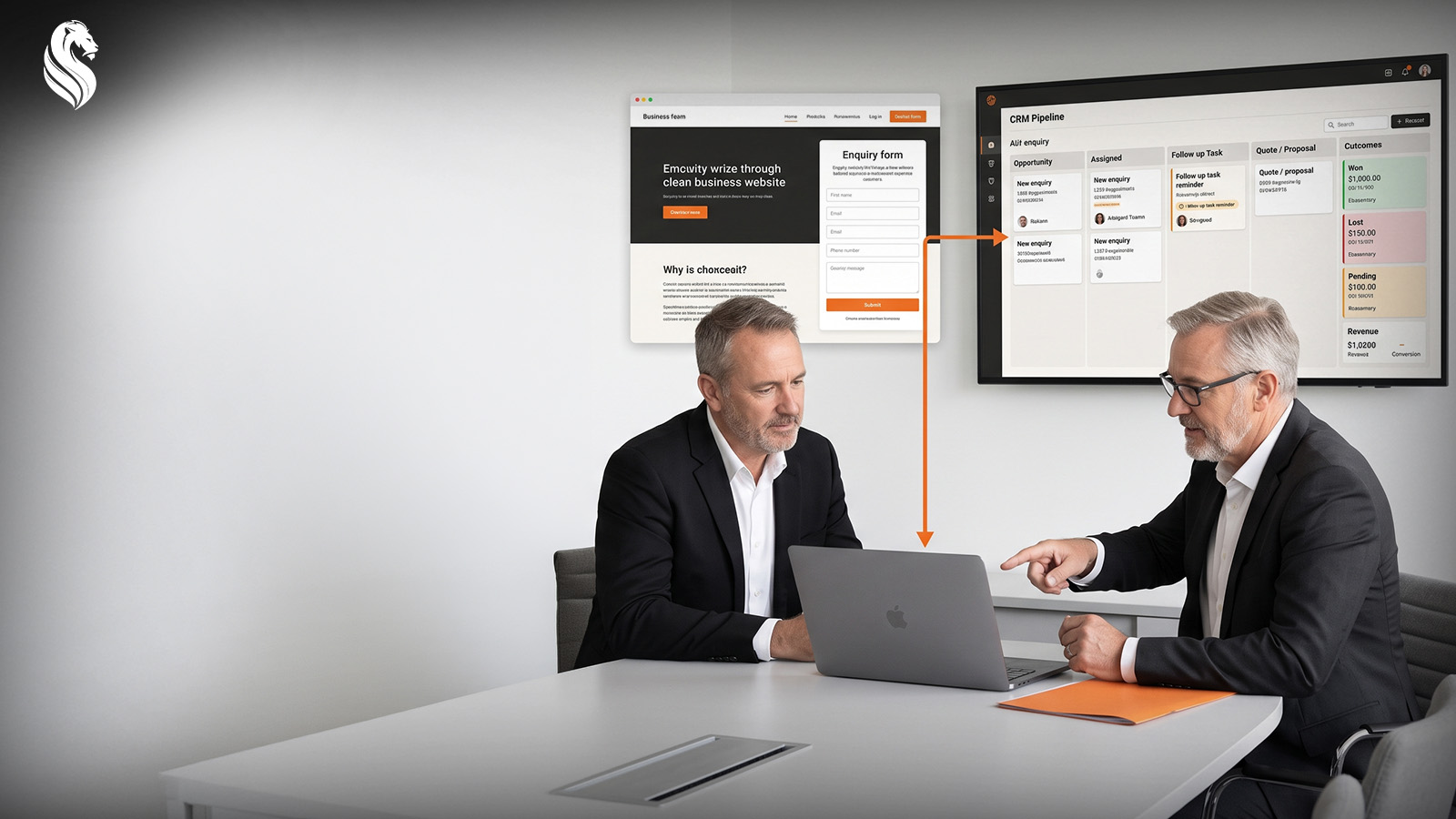
Website and CRM Integration: Why Your Lead System Must Work Together
Most businesses do not lose leads because they lack a website.
They lose them because the website is expected to do too much on its own.
A prospect submits a form. The enquiry lands in an inbox. Someone intends to follow it up. The details are copied into a spreadsheet, passed to another team member, or left sitting until the owner has time to check it. By then, the prospect may have already contacted a competitor.
The problem is not traffic. It is the system behind the traffic.
A website creates interest, while the form captures the information needed to understand the opportunity. The CRM then makes responsibility and progress visible, helping the team follow up quickly and consistently without relying on memory.
These are not four separate tools. They are four parts of one commercial process.
When these parts work together, the business can respond faster, track opportunities, reduce manual administration and understand which marketing activity contributes to revenue. When they remain disconnected, additional leads can create more confusion rather than better results.
This is why website and CRM integration matters. Before increasing investment in ads, SEO, content or outreach, a business should make sure the system receiving those opportunities can manage and convert them properly.
A Website is Not a Lead System by Itself
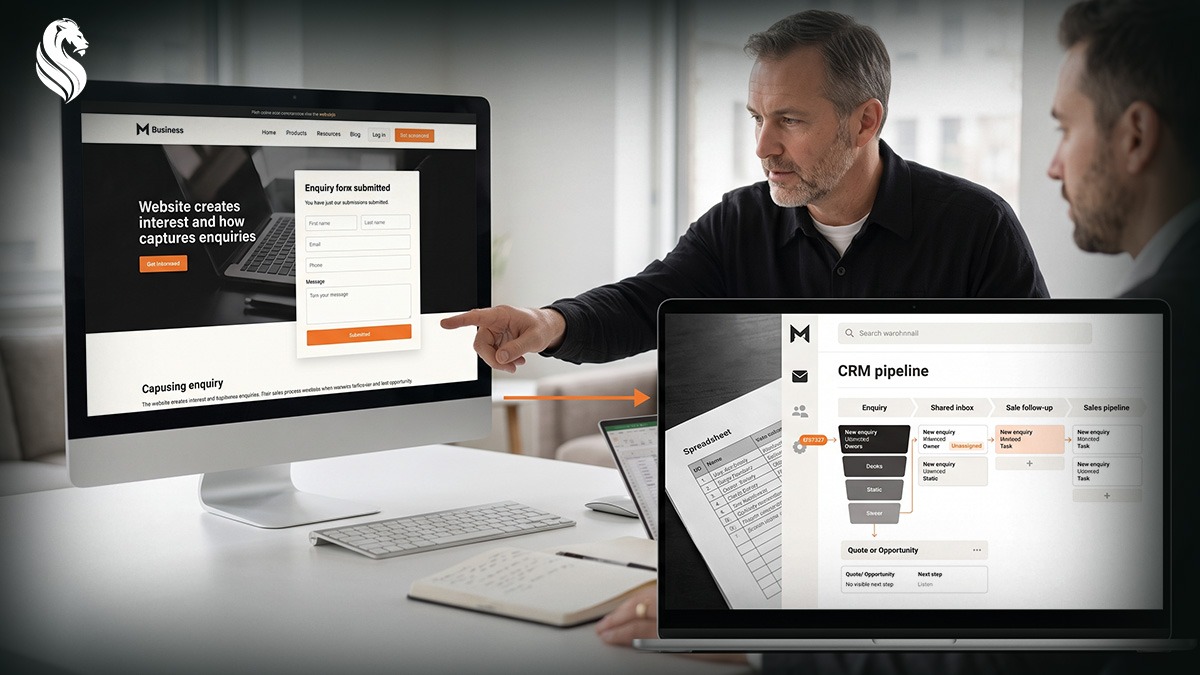
A website can attract attention, explain a service, and generate an enquiry. But its job is not finished when someone submits a form.
The commercial value comes from what happens next.
Many businesses invest in design, copy, SEO or advertising, only for enquiries to land in a shared inbox with no clear process for assigning, tracking or following them up. The website may be working, but opportunities are still lost through slow responses, poor handover, and inconsistent follow-up.
A lead system must do more than collect contact details.
It should record where the enquiry came from, what the prospect needs, who is responsible and what happens next. It should also give the owner a clear view of the pipeline without requiring them to check multiple inboxes, spreadsheets or conversations.
Without that structure, every enquiry depends on someone noticing, forwarding, recording and remembering to follow it up. Each manual step creates another opportunity for delay, duplication or loss.
That is why a professional website can still produce weak commercial results.
The website creates relevance. The form captures intent. The CRM creates visibility. Follow-up creates momentum.
When those parts are connected, the business gains clearer accountability, faster response times and a more reliable path from enquiry to sale.
Website Forms Should Capture Useful Sales Information
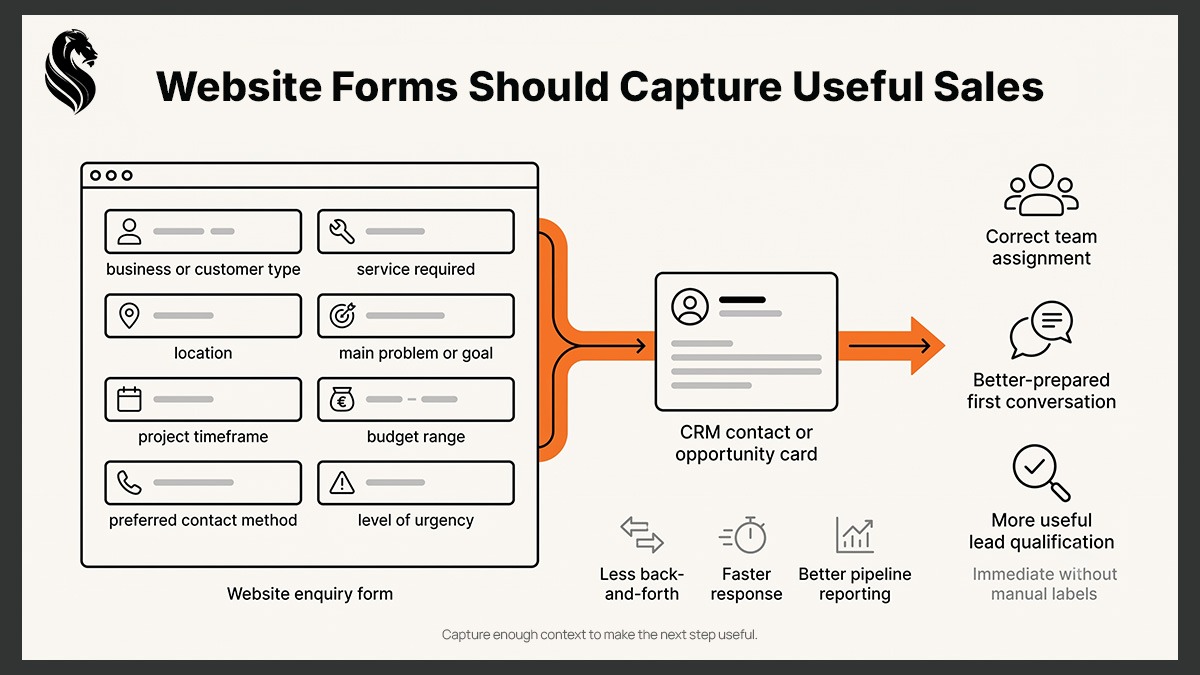
A website form should do more than collect a name, email address, and phone number.
It should give the person handling the enquiry enough context to understand the prospect’s needs, assess fit and choose the right next step without creating unnecessary work for the prospect.
Depending on the service and sales process, useful form fields may include:
- Business type
- Service required
- Location
- Main problem or goal
- Project timeframe
- Budget range
- Preferred contact method
- Level of urgency
The aim is not to make the form longer. It is to collect enough relevant information to reduce unnecessary back-and-forth and make the first conversation more useful.
A well-built form helps the business assess intent early, direct the enquiry to the right person and prepare for a more productive first conversation. It also gives the CRM better information from the start, which improves follow-up, reporting, and pipeline visibility.
A generic contact form may capture interest. A useful sales form captures context.
The System Must Support the Full Journey From Enquiry to Sale
An enquiry is not a result.
It is simply the point where someone has shown enough interest to make contact. What happens after that decides whether the opportunity moves forward or quietly disappears.
This is where many businesses lose good work. The form is submitted, the email arrives, and everyone assumes someone else will deal with it. A day passes. Then another. By the time the prospect hears back, they may already be speaking to a competitor.
The system behind the website should prevent that.
The First Reply Sets the Tone
A prospect should immediately know that their enquiry has been received and what will happen next.
A useful acknowledgement should confirm the expected response time and provide a clear next step. Automation can support this process, but the message should still feel relevant, helpful and connected to a real person.
The team should also know who is responsible. No guessing. No forwarding the same email three times. No waiting for the owner to notice it.
Good Enquiries Still Need to Be Qualified
Not every lead will be right for the business.
The first conversation should confirm the essentials: what the prospect needs, where they are located, when the work is required and whether the request matches the services the business provides.
Early qualification saves time for both parties and helps the team focus on suitable, commercially worthwhile opportunities.
Important details should not live in someone’s head
Notes from calls, meetings and site visits should be recorded in one place and remain easy for the relevant team members to find.
The customer should not have to repeat the same information every time they speak with someone new. The team should be able to see what was discussed, what was promised, and what needs to happen next.
That is especially important when more than one person is involved in the sale.
Quotes Need Attention After They Are Sent
Many opportunities are lost at this stage.
The quote is sent, the team becomes busy, and nobody follows up. The business assumes the prospect has lost interest, while the prospect may conclude that the business is not interested in winning the work.
A scheduled reminder and clearly assigned responsibility can prevent the opportunity from being forgotten.
The system should show which quotes remain open, when they were sent, when follow-up is due and who is responsible for making contact. Follow-up should be part of the process, not something that happens when someone remembers.
Every Enquiry Needs an Outcome
Some opportunities will be won, some will be lost, and others may need to be revisited later. Every outcome should be recorded so the business can see what is happening across the pipeline.
When the business knows why work is won or lost, it can make better decisions. It may find that quotes are taking too long, certain leads are a poor fit, or good prospects are dropping away because nobody follows up.
Without that information, the same mistakes continue.
The Sales-to-Delivery Handover Matters
Winning the work is not the end of the customer journey. The information gathered during the sales process must carry through into delivery.
The information gathered during the sales process should carry through to the person delivering the job. Scope, timing, promises, and customer expectations should not be buried in emails or passed on through a rushed phone call.
A clear handover creates a more professional customer experience and reduces scope errors, delays, duplicated work and unnecessary questions.
The goal is simple: every enquiry should have a clear owner, a clear next step and a recorded outcome.
That is what turns a website enquiry into a working sales process.
Build the System Before Increasing Traffic
More traffic is not always progress.
If the website is unclear, the offer is weak, or the business cannot identify what produces real work, sending more people to the site will increase the cost and visibility of those problems.
Traffic and enquiry numbers may rise without producing a corresponding improvement in qualified opportunities or revenue.
Fix the Weak Points First
Before increasing spend on ads, SEO, content, or outreach, the business should review the parts already in place.
Is the message clear? Does the page build trust? Is the next step easy to understand? Can the business tell which enquiries are worth pursuing?
These questions matter more than increasing traffic before the business understands how well its current enquiries are being handled and converted.
A strong campaign cannot repair a confusing offer. It can only expose that confusion to a larger audience.
Make Sure the Business Can Handle Demand
More enquiries can create more pressure.
If the team is already stretched, the website is attracting poor-fit leads or too much of the sales process still depends on the owner, more traffic may increase workload without producing meaningful revenue growth.
The system should be able to manage additional demand without creating slower response times, unclear responsibilities or unnecessary administration.
That means the business must be ready before the campaign is scaled.
Use Reporting to Remove Guesswork
Traffic should not be increased based on clicks alone.
The business needs to know which pages attract suitable prospects, which offers generate qualified enquiries and which channels contribute to profitable work.
Without that view, growth becomes expensive guesswork.
Clear reporting makes it possible to invest in what is working and fix what is not.
Scale What Has Already Proved Itself
The right time to increase traffic is when the message, offer, lead handling, follow-up process and reporting are working consistently.
The message is clear. The offer makes sense. The website earns trust. The business can manage the demand. The numbers show that the system is producing worthwhile opportunities.
Then promotion becomes more effective.
It is not being used to solve a weak system. It is being used to strengthen one that already works.
The goal is not simply to generate more traffic. It is to build a business that can capture, manage and convert additional demand properly.
How Wandering Lion Connects Your Website, CRM and Sales Process
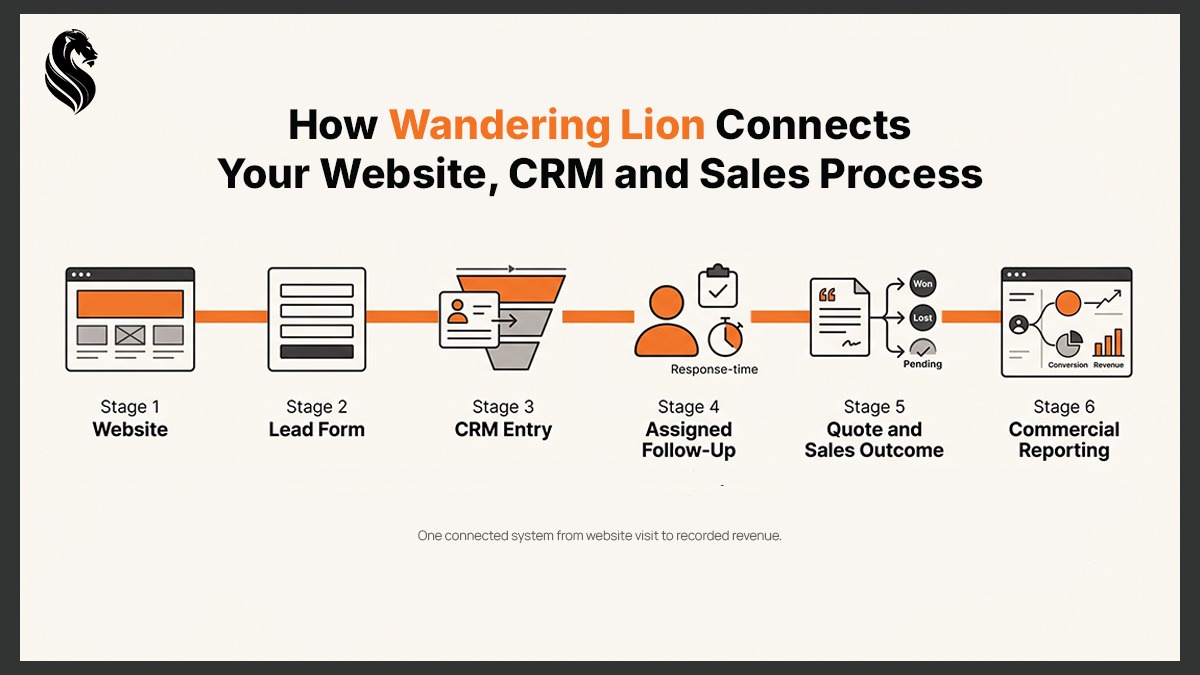
Wandering Lion does not treat your website, CRM, and sales process as separate projects.
They are reviewed as parts of the same commercial system.
The aim is to identify where opportunities are being lost, where manual work is slowing the team down and where the owner still needs to step in to keep the pipeline moving.
Review the foundation
The first step is to look at what is already in place.
That includes the website, forms, CRM, lead handling, quoting process, follow-up, reporting, and the way information moves between team members.
This review identifies where the customer journey is breaking down and which foundation, follow-up, or reporting issues should be fixed before additional traffic is introduced.
Build the Connections Properly
Once the weak points are clear, Wandering Lion connects the website, lead capture, CRM, follow-up and reporting processes into a more reliable commercial system.
That may include improving website structure, refining enquiry forms, setting up CRM stages, creating follow-up reminders, automating routine communication, and making responsibilities clear across the team.
The goal is not to add unnecessary software. It is to make the sales process easier to manage, more visible and less dependent on memory.
Make the Sales Process Easier to Follow
A connected system should make it obvious what happens next.
The team should be able to see which enquiries are new, which need attention, which quotes are still open, and which opportunities have reached an outcome.
That visibility reduces guesswork and gives the owner a clearer view of the pipeline without requiring them to check every inbox, spreadsheet or internal conversation.
Prepare the Business to Scale
Once the system is working, the business is in a stronger position to increase traffic through ads, SEO, content, outreach, or partnerships.
At that point, growth activity feeds into a process that can capture, manage and measure demand properly.
That is the Wandering Lion approach.
Foundation First → Build Properly → Scale Predictably.
Build One System, Not Four Separate Tools
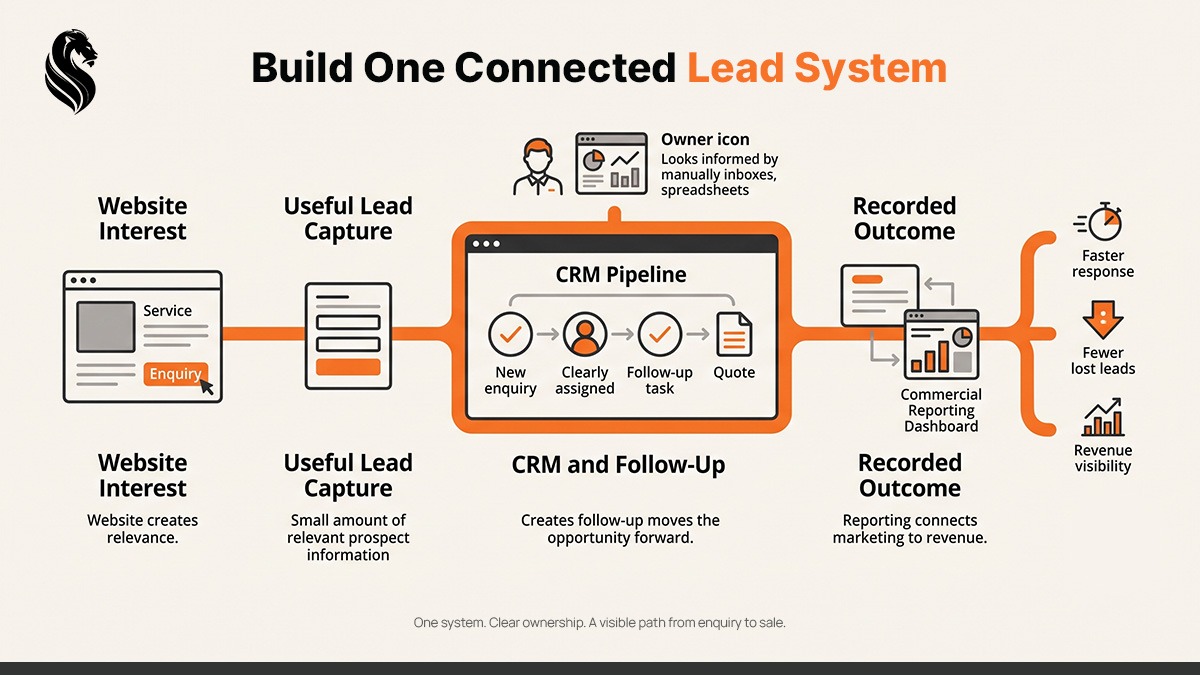
A website, form, CRM and follow-up process should operate as one connected commercial system rather than four separate parts of the business.
The website creates interest, the form captures useful information, the CRM keeps the opportunity visible, and the follow-up process moves it towards a clear outcome. When those parts are connected, the business can respond faster, reduce manual work and make better decisions about which activities are contributing to revenue.
That is the difference between collecting enquiries and building a reliable growth system.
For owner-led businesses, disconnected tools usually create more work for the owner rather than reducing it. The owner ends up checking inboxes, chasing staff, reviewing spreadsheets, and trying to work out which leads are still active.
A properly built system reduces that burden by creating clearer responsibility, stronger pipeline visibility and a more consistent customer experience. It also gives the business a stronger foundation for future growth.
Make sure the system behind your marketing can manage additional demand before adding more traffic, campaigns or activity.
Foundation first. Build properly. Then scale what works.
Ready to Build It Properly?
Wandering Lion helps owner-led businesses review the complete journey from website visit to sale, identify where opportunities are being lost and build the systems needed to improve conversion while reducing manual workload.
Book a Growth Audit to see what needs fixing before you scale.
FAQs
What does website and CRM integration mean?
Website and CRM integration means information captured through your website is transferred into the CRM automatically. When someone fills out a form, their details go straight into the CRM instead of sitting in an inbox. The team can then see the enquiry, know who is handling it, and keep track of what happens next.
Does every business need a CRM?
Not always. But if leads are coming in regularly, it helps to have one place to keep track of them. A CRM can show who has been contacted, which quotes are still open, and which enquiries need attention. It does not need to be complicated to be useful.
Should we fix the system before getting more traffic?
In most cases, yes. More traffic will not produce better commercial results if enquiries are being missed, assigned inconsistently or followed up too slowly. It is better to get the website, forms, CRM, and sales process working together first. Then the business is in a better position to handle more leads.

Disconnected Lead Tools Create Commercial Gaps
Businesses often lose opportunities because their website, forms, CRM and follow-up process operate separately, leaving enquiries dependent on inboxes, spreadsheets and memory. Connecting the full journey from initial enquiry to sale improves visibility, reduces manual workload and helps the business convert more of the demand it already generates before investing in additional traffic.

Connect the Lead Journey Before Increasing Traffic
A website cannot produce reliable commercial results on its own. The business needs one connected system that captures useful information, assigns responsibility, supports consistent follow-up and records what happens to every opportunity.
A Website Is Only the Starting Point
A website can attract attention and generate an enquiry, but the commercial result depends on what happens after the form is submitted. The website, CRM and follow-up process must work together so opportunities do not disappear into inboxes or manual processes.
Forms Should Capture Sales Context
Website forms should collect enough relevant information to help the business understand the prospect’s needs, assess fit and choose the right next step. The goal is not to create longer forms, but to reduce unnecessary back-and-forth and improve lead handling from the beginning.
Every Enquiry Needs Clear Ownership
A connected lead system should make it clear who is responsible, what has already happened and what needs to happen next. It should support qualification, quote follow-up, sales notes, outcome tracking and a clean handover into delivery.
Build the System Before You Scale
More traffic will not fix unclear messaging, weak lead handling or inconsistent follow-up. Review the foundation, improve the customer journey and reporting, then increase ads, SEO, content or outreach once the business can manage and measure additional demand properly.

Find the Gaps Before You Add More Traffic
Wandering Lion helps owner-led businesses review the complete journey from website visit to sale, identify where opportunities are being lost and build a system that reduces manual workload. Start with a Growth Audit to understand what needs to be fixed, connected and measured before you scale.
KEEP READING
Explore more








FEEDBACK FROM THE FIELD
No polished scripts. Just the raw operational reality from owners who cleaned up their pipelines and got out of the daily administrative loop.
“When we set out to grow Discmania in the US market, Ryan was a key part of laying that foundation. He helped us cut through the noise & restructured how we told the story of each release, aligning our athlete partnerships with the brand, and building the kind of community touchpoints that turned buyers into fans. The results spoke for themselves. I’d work with him again without hesitation.”



“In 2019, Ryan from Wandering Lion helped transform the Kalamunda Eastern Suns’ presence in the community. He lifted our social profile, drove some of the strongest brand engagement in the league, and helped turn sparse crowds into sellouts. His work also strengthened sponsor interest and raised the overall profile of the club in a way that felt polished, professional, and genuine.”
“Young people who had switched off from school were not going to reconnect because of a campaign headline or a polished message. They needed a genuine reason to turn up again. Wandering Lion brought a strong sense of care to how the story was told. That gave the foundation a clearer public identity.”





“Working with Wandering Lion on the Discmania project was a standout experience. The team’s position work, blended creative vision with strategic execution, was a major asset as we built the Discmania brand globally. The work he produced didn’t just look great. It elevated our brand presence and supported measurable growth across multiple markets.”




“Wandering Lion understood from the outset that the Pacific Hockey League could not simply be another competition with a new name. Their work helped shape a player-first league with the right balance of ambition, fairness, and professionalism. What they brought was not just branding or communication, but real strategic thinking that gave the PHL a stronger and more credible foundation.”

“Authenticity is the centrepiece of all Lajosi Putter customisation works. The brand is reflected in each of our hand-made custom putters. Ryan’s team solidified that identity in our online presence. It led to higher social media engagement from a golfing community who value hand-crafted putters over overly polished ones.”

‹
›
READY TO FIX YOUR GROWTH?
Stop guessing. Get clarity on what's actually slowing your business down.
