
Building a Hockey League Around the Players

The Results
The work helped create a national league model with stronger player alignment and broader market energy.
- A player-first league structure from inception
- The first time many players felt they had a real voice in the league model
- Participation across every major city that could reasonably be part of the competition
- A clearer national platform for Australian ice hockey
- Stronger alignment between players, teams, and organisers
- A shift in how the sport was viewed: not only as a national team pathway, but as a spectator product with its own commercial potential
This was not just league promotion. It was league design.
Of AIHL players moved across to the PHL
Australian Ice Hockey Needed a Different Model
Before the Pacific Hockey League, Australian ice hockey had talent and commitment, but the national structure was limited.
The sport was often treated mainly as a way to develop players for the national team.
That mattered, but it also left a bigger opportunity underdeveloped.
The league itself needed to become more visible, more entertaining, and more valuable to players, teams, fans, sponsors, and broadcasters.
The market needed a structure that could make ice hockey feel like something people followed, not just something players participated in.

The League Needed to Put Players First
The Pacific Hockey League was built around a clear challenge.
How do you create a national competition that balances ambition with care?
The league needed to be competitive, professional, and exciting.
But it also needed to treat players as stakeholders, not just participants.
That meant thinking carefully about player experience, travel demands, communication, team structure, public visibility, and long-term sustainability.
The goal was not simply to copy traditional league models. The goal was to build something more aligned with the people carrying the sport.

The Problem Was Structure, Not Hype
PHL did not just need a logo, launch campaign, or social media push.
The real work was structural.
The league needed a model that teams could operate within, players could believe in, and fans could understand.
It needed consistency, clarity, and legitimacy from the start.
If the structure was weak, no amount of marketing would make the league sustainable.
The foundation had to come first.


We Designed the League Around People
We worked with the league from the early stages to help shape its identity, structure, and public presence.
The "players first" idea needed to be more than a slogan.
It had to influence how the league was organised, how teams communicated, how the competition was positioned, and how the public understood its purpose.
The strategy was to build a league that felt serious, fair, and future-facing.
How We Helped Shape the League
We implemented structural and communication systems that supported development, exposure, and progression across the league.

Player-First League Model
We helped develop a model that prioritised player experience.
That meant thinking about players as central stakeholders in the sport's growth.
The league needed to support development, visibility, and opportunity while also recognising the practical demands placed on athletes.

Lessons From the NHSL
The Pacific Hockey League built on lessons from the National Hockey Super League.
NHSL had shown that structure, broadcast, fan engagement, and league identity could create real momentum.
PHL took those learnings further by placing player experience and sustainability at the centre of the model.

Stronger National Structure
We supported the creation of a clearer national competition structure.
Every major city that could be part of the league had a pathway to be involved.
That helped the competition feel more national, more complete, and more legitimate.

Clearer Brand Positioning
We helped position PHL as a credible national league with a different point of view.
The brand needed to feel professional, but not cold. Ambitious, but not careless. Player-first, but still commercially serious.
The message had to show that this was not just another league. It was a different way to build the sport.

Communication That Reflected the Values
We supported communications that focused on more than results.
The storytelling needed to reflect the league's values: player experience, development, opportunity, ambition, and the growth of the sport.
That helped the public understand what PHL stood for, not just what games were being played.

Building Ice Hockey as a Spectacle
The league helped shift the conversation around Australian ice hockey.
Instead of viewing the sport only as a national team development system, PHL helped show that ice hockey could be a spectator product.
That meant building for fans, broadcasts, teams, athletes, sponsors, and the wider public.
The sport needed to be seen as something people could follow and enjoy.
A New Way to Think About Australian Ice Hockey
The Pacific Hockey League created a clear alternative to traditional league thinking.
It gave players more voice.
It created stronger early alignment between teams, athletes, and organisers.
It helped the sport be viewed through a wider lens: not only as a pathway for elite development, but as a live entertainment product with cultural and commercial potential.
That shift mattered because it helped raise expectations for what Australian ice hockey could become.
Why the Strategy Worked
The strategy worked because it focused on the real issue.
Australian ice hockey did not just need another competition. It needed a better model.
By designing around players, applying lessons from previous league building, supporting clear communication, and positioning the league as a credible national pathway, PHL created a stronger foundation for long-term growth.
The league was not built around hype. It was built around alignment.
The Simple Difference
Before PHL, Australian ice hockey had talent and passion, but the league model was not fully built around players, fans, or the sport as a spectacle.
After the work, the Pacific Hockey League created a clearer national platform with player experience at its core.
It gave the sport a different way to grow.
In One Line
We helped shape the Pacific Hockey League from inception, building a player-first national competition model that gave athletes a stronger voice and helped position Australian ice hockey as a sport people could follow, watch, and support.


SEE OTHER RESULTS
Explore how owner-led businesses turned growth bottlenecks into clearer systems, better-fit leads, less workload, and measurable commercial progress.








WHAT CLIENTS SAY
Real results from real businesses
“When we set out to grow Discmania in the US market, Ryan was a key part of laying that foundation. He helped us cut through the noise & restructured how we told the story of each release, aligning our athlete partnerships with the brand, and building the kind of community touchpoints that turned buyers into fans. The results spoke for themselves. I’d work with him again without hesitation.”


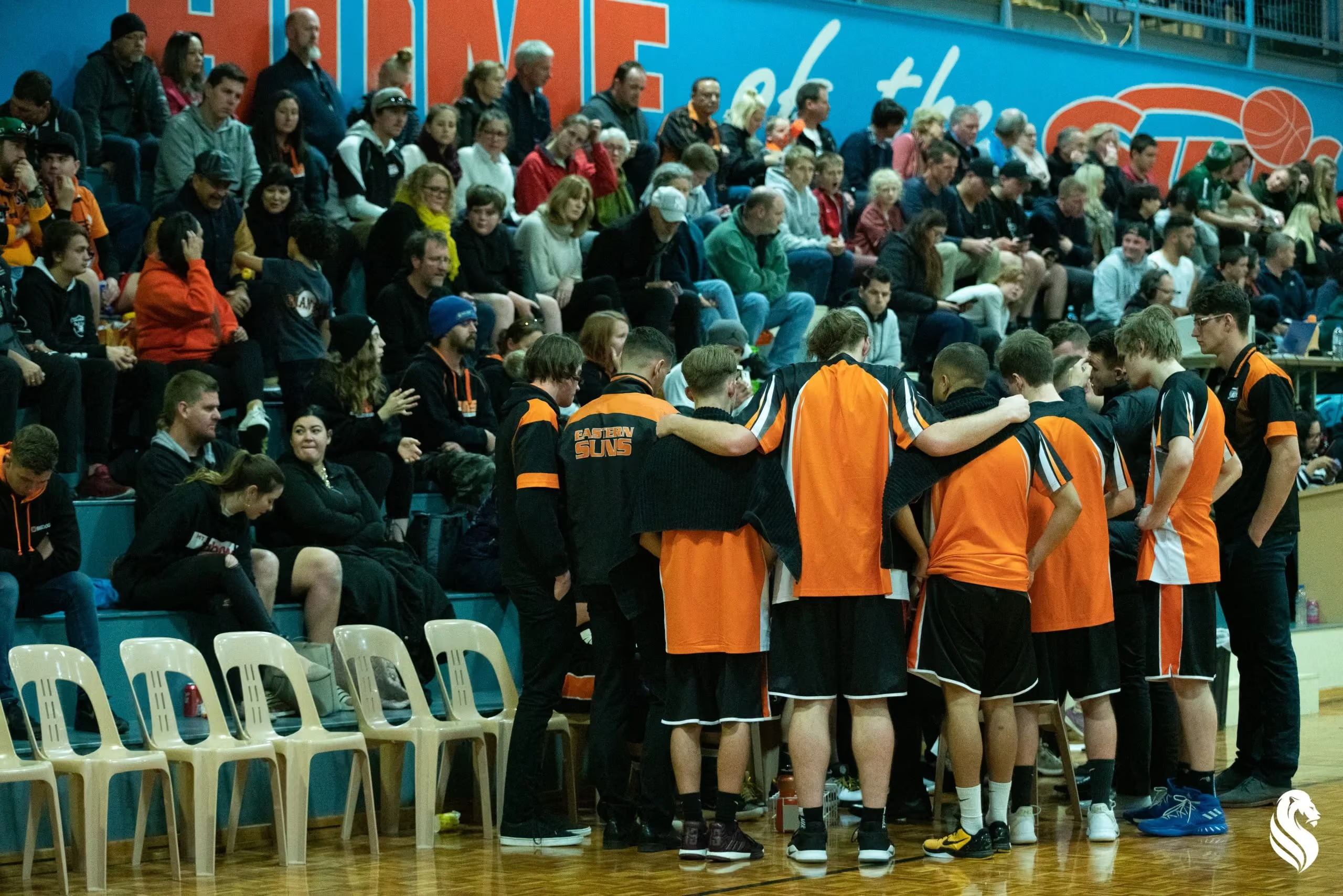
“In 2019, Ryan from Wandering Lion helped transform the Kalamunda Eastern Suns’ presence in the community. He lifted our social profile, drove some of the strongest brand engagement in the league, and helped turn sparse crowds into sellouts. His work also strengthened sponsor interest and raised the overall profile of the club in a way that felt polished, professional, and genuine.”
“Young people who had switched off from school were not going to reconnect because of a campaign headline or a polished message. They needed a genuine reason to turn up again. Wandering Lion brought a strong sense of care to how the story was told. That gave the foundation a clearer public identity.”



“Working with Wandering Lion on the Discmania project was a standout experience. The team’s position work, blended creative vision with strategic execution, was a major asset as we built the Discmania brand globally. The work he produced didn’t just look great. It elevated our brand presence and supported measurable growth across multiple markets.”



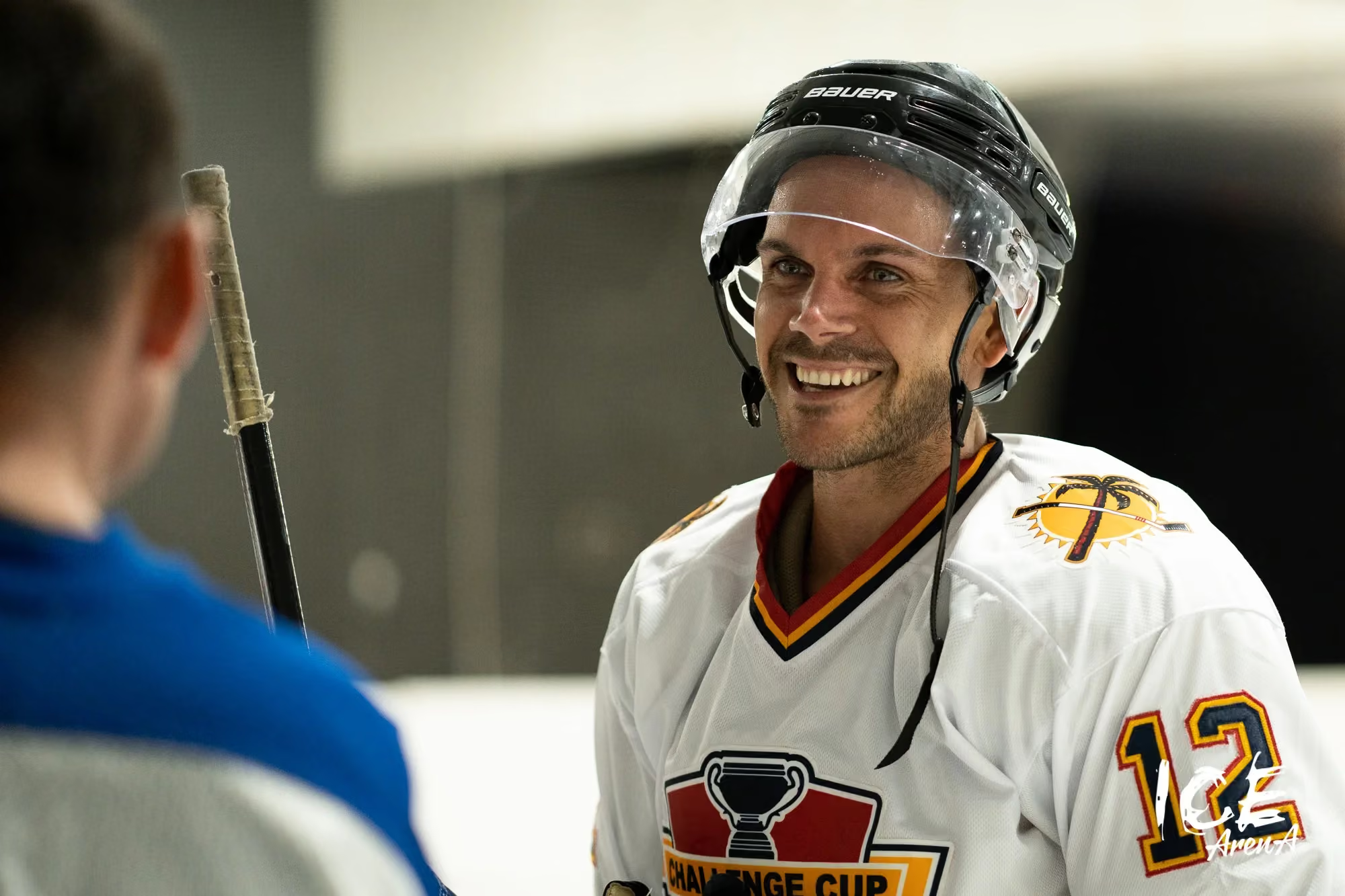
“Wandering Lion understood from the outset that the Pacific Hockey League could not simply be another competition with a new name. Their work helped shape a player-first league with the right balance of ambition, fairness, and professionalism. What they brought was not just branding or communication, but real strategic thinking that gave the PHL a stronger and more credible foundation.”

“Authenticity is the centrepiece of all Lajosi Putter customisation works. The brand is reflected in each of our hand-made custom putters. Ryan’s team solidified that identity in our online presence. It led to higher social media engagement from a golfing community who value hand-crafted putters over overly polished ones.”
‹
›
READY TO SCALE?
We've helped businesses like yours grow revenue and reduce workload
