

Business Growth Strategy Audit for Owner-Led Businesses
Growth does not usually slow because the business needs more noise.
It slows because money is leaking in places the owner, operator, or leadership team cannot clearly see. Weak positioning. Poor website conversion. Slow follow-up. Untracked quotes. Marketing spend is pointing into a system that is not ready to convert.
A proper business growth strategy starts by finding those leaks.
Wandering Lion’s Growth Audit & Opportunity Mapping process shows what slowing growth is, where revenue is being lost, and which opportunities should be fixed first. It gives trade businesses, professional consultancies, and established owner-led firms the clarity to stop guessing, strengthen the foundations, and build the system that brings in the right work.
What a Business Growth Strategy Should Find First
A business growth strategy should not begin with more activity.
It should begin by showing the owner where growth is being held back.
That matters because many businesses look busy on the surface. Ads are running. Content is going out. Referrals are coming in. The team is answering enquiries. The owner is still pushing things forward.
But busy does not always mean the business is growing cleanly.
Growth often slows because the system underneath the activity is weak. The brand may not be clear enough. The website may not build enough trust. The enquiry process may create friction. Good leads may be followed up on too slowly. Quotes may go cold without being tracked. Reports may show marketing numbers without showing where money is actually being won or lost.
These are not always obvious problems. They sit between marketing, sales, operations, and customer experience. That is why they are easy to miss and expensive to ignore.
A proper business growth strategy, supported by a clear business growth audit, should find:
- Where trust is breaking down before the enquiry
- Where good leads are being lost after enquiry
- Which pages, offers, or messages are failing to convert
- Where sales follow-up is too slow, manual, or inconsistent
- Where marketing spend is being wasted
- Which systems are creating unnecessary workload
- Which opportunities should be fixed first
This is the difference between a business growth strategy and a marketing plan.
A marketing plan may tell the business what to publish, promote, or spend. A growth strategy should explain what needs to be fixed so that the activity can actually produce a better commercial result.
Most owners do not need more options.
They need better order.
That is the role of a Growth Audit & Opportunity Map. It turns a messy growth picture into a clear sequence: find the leaks, fix the foundations, build the system, then scale what works.
What Is a Growth Audit?
A Growth Audit is a structured review of the parts of the business that affect revenue, conversion, workload, and scale.

It is not a surface-level marketing review, and it does not only look at ads, content, or website traffic. It looks at the full growth system and asks whether the business is built to turn attention into the right work.
Wandering Lion reviews the areas that usually decide whether growth becomes cleaner or more chaotic:
- Brand positioning and offer clarity
- Website structure and conversion points
- Landing pages and customer journey flow
- Lead capture forms and enquiry quality
- Sales follow-up, quote tracking, and close-out process
- Marketing channels and campaign performance
- CRM, automation, and reporting systems
- AI readiness, AEO readiness, and future growth capability
This kind of audit is especially useful for owner-led businesses that have already built traction but now find it harder to grow.
That may look like a trade business getting enquiries, but not enough profitable jobs. A land surveyor or consultancy with strong capability but weak market visibility. An established B2B firm may be spending on marketing without reporting that connects activity to revenue, quote quality, or sales outcomes. Or a growing company where the owner is still too involved in sales, admin, quoting, and follow-up.
The common pattern is not always a lack of activity.
It is a lack of clarity around what is working, what is leaking money, and what needs to be fixed first.
By the end of the audit, the owner should understand where growth is being slowed, where opportunities are being lost, and what sequence of action will help the business grow with less guesswork.
Why More Marketing Is Not Always Better Growth
More marketing is often the easiest answer to reach for.
Run more ads. Post more content. Send more emails. Push harder into SEO. Ask for more referrals. Increase the budget and hope the extra activity creates the result.
Sometimes it helps.
But if the business has weak foundations, more marketing can simply make the leaks more expensive.
Better growth starts further back. It asks whether the business is ready to convert the attention it already gets. It looks at the offer, the message, the website, the customer journey, the sales process, the follow-up system, and the reporting. It asks a harder question: if we brought in more opportunities tomorrow, would the business turn them into better revenue, or would more of them be wasted?
That is the difference.
Marketing can create attention. A stronger growth system turns the right attention into commercial progress.
| More Marketing | Better Growth |
|----------------|---------------|
| Focuses on more activity | Focuses on better commercial outcomes |
| Asks, "How do we get more leads?" | Asks, "Where are good leads being lost?" |
| Increases traffic before checking the system | Reviews the foundation before adding volume |
| Measures clicks, impressions, and enquiry numbers | Measures lead quality, conversion, quote rate, sales outcomes, and wasted spend |
| Sends people to pages that may not convert | Improves the website, landing pages, proof, and calls-to-action first |
| Pushes harder on ads, SEO, content, or outreach | Connects marketing to sales, follow-up, reporting, and customer journey performance |
| Can create more noise for the owner and team | Reduces confusion, manual work, and owner dependency |
| Treats marketing as the solution | Treats marketing as one part of the growth system |
| Risks of scaling inefficiency | Scales what has been fixed, proven, and measured |
The first job is to repair.
Once the foundation is stronger, marketing becomes more useful. Ads have a clearer message to amplify. SEO brings prospects to pages that are built to convert. Content supports trust instead of creating noise. Reporting shows what is working, what is leaking, and what should happen next.
That is better growth.
Not simply more activity, but a cleaner system that brings in the right work and gives the business a better chance of turning opportunity into revenue.
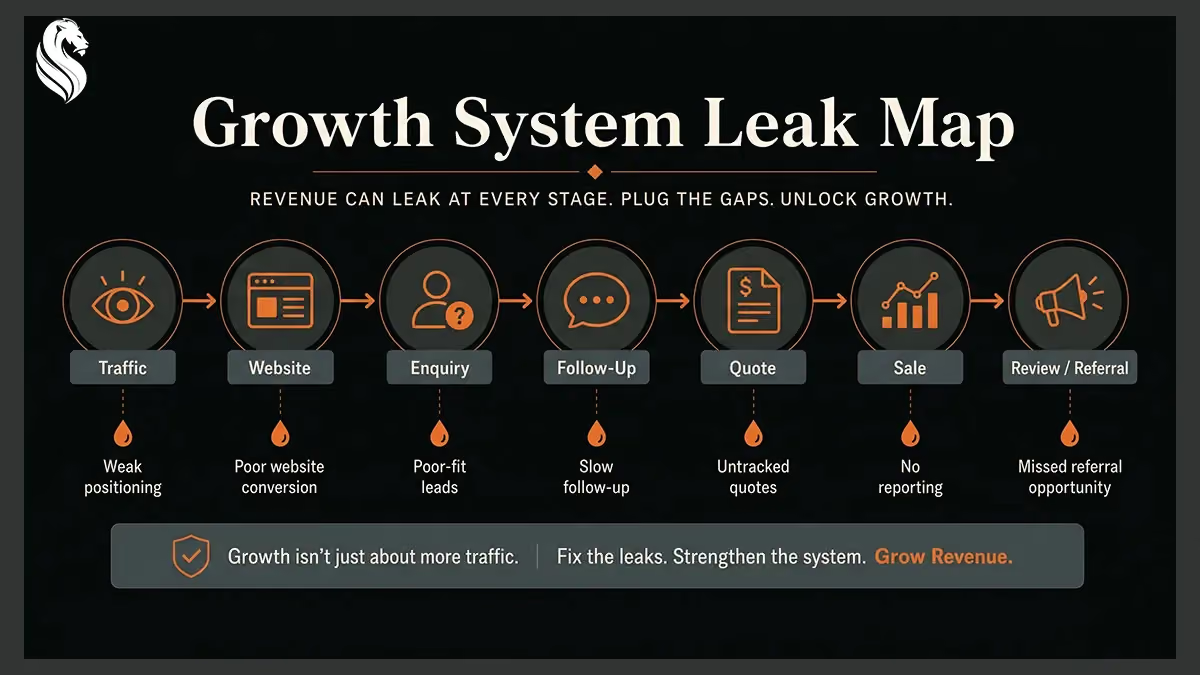
Where Money Usually Leaks in an Owner-Led Business
Money usually leaks in quiet places. The most common leaks usually sit in website conversion, campaign destinations, follow-up speed, quote tracking, lead quality, referral systems, reporting, and manual admin.
Not always through obvious waste, but through weak conversion, slow follow-up, unclear ownership, and missed opportunities that never get properly tracked.
Website Visitors Who Do Not Enquire
A website can attract the right people and still lose them.
For trade businesses, that might mean a local customer visits the site but cannot quickly see services, suburbs, reviews, or how to request a quote.
For land surveyors and professional consultancies, it may mean that a builder, developer, architect, planner, or property owner cannot quickly understand the firm’s expertise, project fit, process, or credibility.
For established owner-led businesses, it often shows up as a website that no longer reflects the size, capability, or value of the business.
In each case, the result is the same. The visitor does not see enough reason to trust the business, so they leave without making contact.
That is not a traffic problem. It is a conversion problem.
Ad Spend Sent Into Weak Pages
Ads can bring attention, but they cannot fix a weak destination.
If a trade business sends paid traffic to a page with thin proof, unclear services, or no strong local relevance, the budget works harder than it should.
If a surveying firm or consultancy sends traffic to a generic service page without clear authority, experience, project fit, or next steps, enquiry quality usually suffers.
If an established business runs campaigns before fixing positioning, offering clarity, reporting, or follow-up, more spending can simply expose more weakness.
More budget only makes the leak bigger when the page is not ready to convert.
Good Leads Followed Up Too Slowly
Speed matters after the enquiry.
A trade enquiry can go cold quickly if no one calls back, responds to the form, or follows up after a missed call. In many trade businesses, this still depends on the owner’s phone, memory, or availability.
For surveyors and consultancies, slow follow-up can cost higher-value project enquiries where the buyer is comparing several credible providers.
For established businesses, delayed response often points to a deeper system issue: unclear ownership, no CRM discipline, poor handover, or a team relying on manual reminders.
That creates inconsistent revenue from opportunities the business has already paid to create.
Quotes That Go Cold
A quote is not the end of the sales process.
Trade businesses can lose good jobs because quotes are sent but not tracked, followed up on, or reviewed.
Surveyors and consultancies can lose project opportunities because proposals are not supported with timely communication, proof, or a clear next step.
Established businesses can lose revenue because the quoting or proposal process depends too heavily on the owner, with no clear visibility over what has been won, lost, delayed, or forgotten.
This is one of the most common places where money leaks after the enquiry.
Poor-Fit Enquiries That Drain Time
Not every lead is worth the same.
For trade businesses, poor-fit enquiries often look like tyre-kickers, low-value jobs, wrong suburbs, or people who are unlikely to accept the quote.
For land surveyors and professional consultancies, they may receive enquiries outside the firm’s ideal project type, technical scope, location, or fee range.
For established businesses, poor-fit leads can consume sales calls, admin, proposals, and owner attention without creating meaningful commercial return.
Better growth is not just more leads. It is better-fit leads.
Referral Opportunities Left to Chance
Many owner-led businesses earn referrals but do not have a system for creating more of them.
A trade business may have happy customers, builders, property managers, or local partners who could refer more work, but no structured process for asking.
A surveyor or consultancy may have strong relationships with architects, developers, engineers, planners, or builders, but no clear referral pathway or partner content to support those introductions.
An established owner-led business may have a strong network, but referrals often still rely on goodwill, memory, and timing.
Trust is already there. The leak happens because there is no system to turn that trust into a repeatable opportunity.
Marketing Reports That Do Not Show Revenue Impact
Reports can look full and still fail the owner.
A trade business does not only need to know how many clicks or calls came in. It needs to know which suburbs, services, and campaigns are producing profitable jobs.
A surveying firm or consultancy needs to understand which enquiries are turning into the right project opportunities, not just whether traffic has increased.
An established owner-led business needs reporting that connects marketing activity to lead quality, quote rate, sales outcomes, workload, and wasted spend.
Without that, reporting becomes noise.
The owner sees activity, but not the commercial meaning.
Manual Admin That Keeps the Owner Involved
A business can grow and still be too dependent on the owner.
In trade businesses, this often shows up through missed calls, manual quoting, scattered enquiries, and follow-up sitting inside the owner’s head.
For surveyors and consultancies, it may appear as slow proposal handling, inconsistent enquiry tracking, or too much technical context being carried by one or two senior people.
For established businesses, the issue is often broader. The owner is still involved in too many sales, admin, reporting, approval, and follow-up decisions.
Some of this can often be improved through better systems, CRM discipline, automation, clearer handover, and stronger team responsibility.
Customer Journey Gaps Between Enquiry and Sale
Many agencies stop at lead generation, but revenue is won or lost after the enquiry. Wandering Lion treats this handover as part of the growth system because a lead only matters if the business can turn it into the right work.
For trade businesses, the journey may break between call, quote, follow-up, booking, review, and repeat work.
For land surveyors and professional consultancies, the journey may break between website visit, enquiry, technical discussion, proposal, decision, and project win.
For established owner-led businesses, the journey may break because marketing, sales, operations, and reporting are not properly connected.
The business may be creating opportunities but failing to carry them through to completion.
That is why Wandering Lion reviews the full journey, not just the campaign.
Once these leaks are visible, the business can stop guessing. It can protect more of the revenue it is already close to winning, reduce wasted spend, and make each new growth activity work harder.
The Wandering Lion Sequence for Cleaner Growth
Growth becomes easier to manage when the order is right.
Many businesses try to scale before the foundations are strong enough to carry more demand. They increase marketing spend, publish more content, run more campaigns, or chase more leads before fixing the parts of the business that turn attention into revenue.
That creates more pressure before the business has more control.
Wandering Lion uses a clearer sequence: Foundation First → Build Properly → Scale Predictably.
Foundation First
The first step is diagnosis.
Before adding more growth activity, the business needs to understand what is actually slowing it down. That means reviewing the brand, offer, website, customer journey, lead capture, sales process, reporting, systems, automation, and follow-up.
This stage looks for the problems that often sit underneath poor performance:
- Unclear positioning
- Weak website trust
- Poor-fit enquiries
- Slow lead response
- Missed quote follow-up
- Manual admin
- Unclear reporting
- Marketing spend is pointing to a weak system
The goal is to remove guesswork.
Once the foundation is clear, the owner can see what needs attention, what is costing money, and what should be fixed before scale is added.
The owner leaves this stage knowing what is broken, what matters most, and what should not be scaled yet.
Build Properly
After the audit, the next job is to improve the system.
This is where the business strengthens the parts that convert interest into revenue. That may include sharper positioning, better website structure, stronger landing pages, clearer lead capture, CRM improvements, automated follow-up, reporting dashboards, sales handover processes, and better customer journey flow.
The purpose is not to make the business look more active.
It is to make the business easier to understand, easier to trust, easier to buy from, and easier to manage.
When the system is built properly, marketing has something stronger to support. Leads are handled with more discipline. The owner has better visibility. The team has clearer responsibility. Prospects move through the journey with less friction.
The owner leaves this stage with a stronger commercial system, not just a longer marketing task list.
Scale Predictably
Scale should come after the business is ready for more volume.
Once the foundation is stronger and the system is working, growth activity can be increased with more confidence. That may include paid ads, SEO, AEO, content, case studies, retargeting, partnerships, outreach, referral systems, and campaign optimisation.
At this stage, the aim is not simply to create more enquiries.
The aim is to scale what has already been fixed, tested, and measured.
That makes growth easier to control. The business can see which channels are producing better-fit leads, which enquiries are turning into quotes, which quotes are becoming revenue, and where the next opportunity sits.
This is the commercial reason for the sequence.
- Foundation creates clarity.
- Build creates the system.
- Scale increases what works.
When those steps happen in the right order, growth becomes less reactive and more predictable.
The owner leaves this stage with clearer evidence of which channels, messages, offers, and follow-up systems are producing better-fit work.
Build the Strategy Before You Scale the Activity
A stronger business growth strategy does not start with doing more.
It starts with seeing clearly.
Before an owner spends more on ads, rebuilds a website, hires another supplier, or adds another campaign, they need to know what is actually slowing growth. They need to see where trust is breaking down, where leads are being lost, where money is leaking, and which opportunities deserve attention first.
That is the role of Wandering Lion’s Growth Audit & Opportunity Mapping process.
It gives owner-led businesses a clearer view of the system behind growth: the brand, website, customer journey, lead capture, sales follow-up, reporting, automation, and commercial priorities. Then it turns that view into a practical order of action.
- Find the friction.
- Fix the foundation.
- Build the system.
- Scale what works.
When those steps happen in the right order, growth becomes less reactive and more controlled. Marketing has clearer foundations to support. Leads are easier to qualify. Follow-up becomes more consistent. Reporting becomes more useful. The owner can make better decisions with less guesswork.
That is how a business moves from more activity to better growth.
Ready to find what is slowing growth before you spend more on activity? Book a Growth Audit & Opportunity Mapping session and get a clearer view of where revenue is being lost, what needs to be fixed first, and how to build a stronger system for better-fit work.
FAQs
What is a business growth strategy?
A business growth strategy is a clear plan for improving revenue, conversion, workload, and scalability. It should not only list marketing activities. It should show what slowing growth is, where money is leaking, what needs to be fixed first, and how the business can build a stronger system for better-fit work.
What does a Growth Audit include?
A Growth Audit reviews the key parts of the business that affect growth. This can include brand positioning, website performance, lead capture, customer journey, sales follow-up, quoting, CRM, reporting, automation, marketing channels, and future readiness. The goal is to find the real friction before more money is spent on growth activity.
When should a business get a Growth Audit?
A Growth Audit is useful when a business is busy, but growth feels unclear, messy, or too dependent on the owner. It is especially valuable when leads are inconsistent, marketing spend is hard to measure, quotes go cold, follow-up is manual, or the business needs stronger systems before scaling.
Is a Growth Audit the same as a marketing audit?
No. A marketing audit usually reviews channels, campaigns, traffic, and performance. A Growth Audit looks more broadly at the business system behind growth, including positioning, website conversion, lead quality, sales follow-up, quote tracking, CRM, reporting, automation, and customer journey performance.

Find the Real Blockers Before Adding More Activity
Owner-led businesses often struggle because revenue is leaking through weak positioning, poor website conversion, slow follow-up, untracked quotes, and unclear reporting. A Growth Audit identifies the highest-impact problems, creates a clear order of action, and ensures the business fixes its foundations before scaling marketing activity.

Fix the Growth Leaks Before You Scale
Owner-led businesses often have more growth activity than growth clarity. The strongest business growth strategy starts by diagnosing the full commercial system before adding more marketing.
Find the Real Growth Blockers
Review the brand, website, lead flow, sales process, follow-up, reporting, and systems to identify what is slowing revenue.
Protect the Opportunities You Already Have
Faster responses, better quote tracking, clearer ownership, and stronger customer journeys can recover revenue without increasing marketing spend.
Fix the Foundation Before Adding Volume
More traffic will not solve unclear positioning, weak conversion pages, poor lead capture, or inconsistent sales follow-up.
Scale What Has Been Proven
Once the foundation is stronger and the system is measurable, the business can invest in ads, SEO, content, partnerships, and outreach with greater confidence.
.avif)
Find What Is Slowing Growth Before Spending More
Book a Growth Audit with Wandering Lion to identify where revenue is leaking, which opportunities are closest to commercial impact, and what needs to be fixed first. You will leave with a clearer growth sequence built around stronger foundations, better systems, and measurable priorities.
KEEP READING
Explore more







FEEDBACK FROM THE FIELD
No polished scripts. Just the raw operational reality from owners who cleaned up their pipelines and got out of the daily administrative loop.
“When we set out to grow Discmania in the US market, Ryan was a key part of laying that foundation. He helped us cut through the noise & restructured how we told the story of each release, aligning our athlete partnerships with the brand, and building the kind of community touchpoints that turned buyers into fans. The results spoke for themselves. I’d work with him again without hesitation.”



“In 2019, Ryan from Wandering Lion helped transform the Kalamunda Eastern Suns’ presence in the community. He lifted our social profile, drove some of the strongest brand engagement in the league, and helped turn sparse crowds into sellouts. His work also strengthened sponsor interest and raised the overall profile of the club in a way that felt polished, professional, and genuine.”

“Young people who had switched off from school were not going to reconnect because of a campaign headline or a polished message. They needed a genuine reason to turn up again. Wandering Lion brought a strong sense of care to how the story was told. That gave the foundation a clearer public identity.”





“Working with Wandering Lion on the Discmania project was a standout experience. The team’s position work, blended creative vision with strategic execution, was a major asset as we built the Discmania brand globally. The work he produced didn’t just look great. It elevated our brand presence and supported measurable growth across multiple markets.”




“Wandering Lion understood from the outset that the Pacific Hockey League could not simply be another competition with a new name. Their work helped shape a player-first league with the right balance of ambition, fairness, and professionalism. What they brought was not just branding or communication, but real strategic thinking that gave the PHL a stronger and more credible foundation.”

“Authenticity is the centrepiece of all Lajosi Putter customisation works. The brand is reflected in each of our hand-made custom putters. Ryan’s team solidified that identity in our online presence. It led to higher social media engagement from a golfing community who value hand-crafted putters over overly polished ones.”

‹
›
READY TO FIX YOUR GROWTH?
Stop guessing. Get clarity on what's actually slowing your business down.
