

Leads Do Not Always Solve the Problem
Some founders feel they require more leads to hasten the growth of their business. That is often the first conclusion, especially when the pipeline feels thin, or sales feel harder than they should. More activity seems like the obvious answer.
But a lead problem is not always the real problem. In many cases, the business is attracting attention without creating enough trust, clarity, or commercial relevance to convert that attention well. When positioning is weak, more leads can simply mean more poor-fit enquiries, more wasted spend, and more pressure on a message that is not landing. Before adding budget, channels, or outreach, it helps to check whether the real issue is volume or a positioning problem.
Leads Do Not Always Solve the Problem
More leads do not always create progress. A business can increase traffic book more sales calls, and still find that growth feels harder than it should. That usually happens when the problem is not lead volume, but what sits underneath it.
If the positioning is the problem, more leads often just mean more poor-fit conversations. The message may attract attention, but not enough trust. An unclear offer does not generate interest in what the business has to offer. IT simply draws traffic that does not convert.
This is why more activity can become a distraction. It adds pressure to the pipeline without fixing the reason conversion feels inconsistent in the first place. When the real issue is a positioning problem, the business does not need more attention first. It needs stronger clarity around who it is for, what it does best, and why that matters to the right buyer..
Signs You May Have a Positioning Problem, Not a Lead Problem

A positioning problem often shows up before a business realises what is actually wrong. There is a problem with the brand’s positioning when a business experiences the following signs:
- Incompatible leads: Even with a large number of enquiries, it hardly matters when they cannot be converted. It is a problem that stems from the messaging when it is not drawing the right audience’s attention.
- The Value Takes Too Long To Explain: People do not always understand the value of the business straight away. If every sales call starts with a long explanation of what you do, who it is for, and why it matters, the positioning is probably not clear enough yet.
- The Business Sounds Too Similar To Competitors: The business may be good, but the message does not give people much reason to remember it. When the wording sounds like everyone else in the market, buyers can struggle to see what makes this option meaningfully different.
- Messaging Keeps Changing Without Better Results: The copy keeps getting adjusted, the offer gets reworded, and new angles keep getting tested, but the outcome does not really improve. That usually means the issue is not just the wording. It is more likely the business still has not landed on a position that feels clear and convincing.
The Difference Between a Traffic Issue and a Positioning Issue
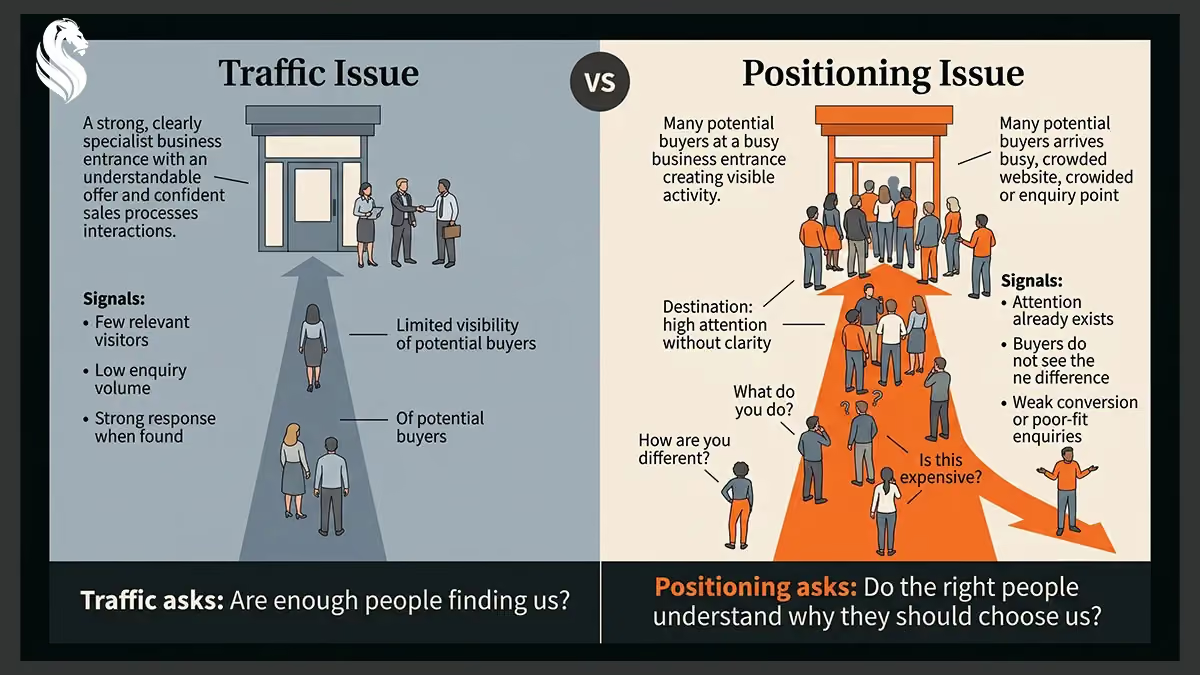
Not every slowdown in growth comes from a lack of visibility. Sometimes the business needs more reach. Other times, it is already getting attention, but the message is not strong enough to convert it.
What A Traffic Issue Usually Looks Like
A traffic issue usually means not enough of the right people are finding the business in the first place. Website visits are low, inbound enquiries are limited, and there is not enough activity at the top of the funnel to create steady opportunities. In that case, the offer may be solid, and the message may make sense, but the business simply does not have enough reach yet.
Here are common traffic issues:
- There is a low visitor rate to the landing page
- The content has fewer views
- The site is not ranking on relevant keywords or terms
- There is a high bounce rate where visitors are clicking the links, but are not spending time on the page
What A Positioning Issue Usually Looks Like
A positioning issue looks different. People are landing on the website, clicking on ads, opening emails, or booking calls, but too much of that attention goes nowhere. Buyers do not quickly understand why the business matters, who it is really for, or what makes it different from other options. The traffic is there, but the message is not doing enough with it.
Here are common positioning issues:
- While the traffic is high, there are low conversions
- Competitors are seeing better sales on similar services or products
Why The Two Problems Get Confused
These issues often get mixed up because they can produce similar symptoms on the surface. Sales feel slow, lead flow feels inconsistent, and growth starts to stall. That leads many founders to assume they just need more traffic, when the real issue is that the current traffic is not converting well enough because the positioning is too weak or too broad.
How To Tell Which One You Are Actually Dealing With
A simple way to assess it is to look at what happens after attention is created. If very few people are finding the business at all, traffic may be the main issue. If people are finding it but not responding, converting, or moving forward with much confidence, the problem is more likely positioning. More traffic helps when not enough people are seeing the offer. Better positioning helps when they are seeing it, but not seeing enough reason to act.
Why Trust Breaks Before Conversion Does
Buyers rarely drop off at the exact moment trust starts to weaken. In most cases, hesitation shows up earlier, long before conversion falls away in a way teams notice clearly.
Trust Usually Slips In The Message First
Trust starts forming before a sales call, proposal, or pricing discussion ever happens. It begins with how the business presents itself through its message, offer, and overall relevance to the buyer. When that message feels vague, too broad, or too similar to everyone else, people may stay curious, but they do not build much confidence. They pay attention, but they are not fully convinced.
Conversion Problems Tend To Show Up Later
By the time conversion starts dropping, trust has often already been weakened for a while. Buyers ask more questions, delay decisions, compare more options, or lose momentum during the process. That is why a positioning problem can look like a conversion problem on the surface. Clearer positioning builds trust earlier, making the buying decision feel easier, faster, and far less forced.
Conclusion
A positioning problem is not the same as a lead problem. When trust is weak, the message is unclear, or the business does not feel meaningfully different, extra activity usually creates more noise than progress. Stronger positioning helps the right buyers understand the value faster, trust the offer sooner, and move forward with more confidence. That is why founders need to diagnose the real issue first, because fixing a positioning issue often improves lead quality, conversion, and growth at the same time.
The Wandering Lion team can help founders with their positions by identifying an integrated system suitable for their business. Book a 15-minute brand & growth scan today!
FAQs
Can a business fix a positioning problem without a full rebrand?
A positioning problem does not always mean the business needs a new name, logo, or visual identity. In many cases, the real fix is clarifying the audience, sharpening the offer, and making the message easier to understand. A business can improve market perception significantly without rebuilding the brand from scratch.
What should a founder review first when they suspect a positioning problem?
Start with the basics buyers see first: homepage messaging, offer clarity, proof, and how quickly the business explains who it helps. If those points feel broad or hard to understand, the issue may sit in positioning rather than lead flow. Founders usually get better answers there than by looking at lead volume alone.
Can strong positioning improve results across more than one channel?
Yes. Good positioning does not just help one campaign or one page perform better. It usually improves paid ads, outbound messaging, website conversion, referrals, and sales conversations because the business becomes easier to understand and easier to trust. That makes the entire growth system work harder with the same amount of attention.
How long does it usually take to see improvement after fixing positioning?
It depends on how deeply the positioning issue affects the business, but some signs improve early. Better-fit enquiries and stronger buyer response can appear before major revenue changes do. Positioning tends to improve the quality of momentum first, then the numbers become more consistent as the message spreads.

How to Tell When Lead Generation Isn’t the Real Problem
A business can generate enquiries and still struggle to grow. Poor-fit leads, repeated price objections, long sales conversations, and inconsistent conversion often point to a positioning issue rather than a lack of demand. Clearer positioning helps the right buyers recognise the value faster, trust the offer sooner, and move forward with greater confidence.

More Leads Won’t Fix an Unclear Position
Before increasing traffic, campaign activity, or advertising spend, make sure buyers can clearly understand what the business does, who it serves, and why it’s the right choice. Otherwise, more lead generation may simply send additional people into a customer journey that isn’t converting effectively.
More lead volume doesn’t automatically create growth.
Additional enquiries won’t solve unclear messaging, weak differentiation, or an offer that buyers struggle to understand. They often increase the time spent qualifying poor-fit opportunities.
Poor lead quality can be a positioning warning sign.
When enquiries regularly come from the wrong customers, focus heavily on price, or misunderstand the service, the market may not be receiving a clear enough signal about who the business is built to serve.
Conversion problems usually appear after trust has weakened.
Long sales cycles, repeated explanations, stalled proposals, and growing objections often mean buyers haven’t understood the value or developed enough confidence earlier in the customer journey.
Clear positioning makes the whole growth system work harder.
When the right buyers understand the value quickly, marketing becomes more relevant, sales conversations become more focused, and the business can grow without relying on constant explanation or aggressive persuasion.

Diagnose the real growth problem before spending more on lead generation.
Book a 15-Minute Brand & Growth Scan to identify the positioning, messaging, customer journey, and conversion gaps preventing the right enquiries from becoming profitable work.
KEEP READING
Explore more







FEEDBACK FROM THE FIELD
No polished scripts. Just the raw operational reality from owners who cleaned up their pipelines and got out of the daily administrative loop.
“When we set out to grow Discmania in the US market, Ryan was a key part of laying that foundation. He helped us cut through the noise & restructured how we told the story of each release, aligning our athlete partnerships with the brand, and building the kind of community touchpoints that turned buyers into fans. The results spoke for themselves. I’d work with him again without hesitation.”



“In 2019, Ryan from Wandering Lion helped transform the Kalamunda Eastern Suns’ presence in the community. He lifted our social profile, drove some of the strongest brand engagement in the league, and helped turn sparse crowds into sellouts. His work also strengthened sponsor interest and raised the overall profile of the club in a way that felt polished, professional, and genuine.”

“Young people who had switched off from school were not going to reconnect because of a campaign headline or a polished message. They needed a genuine reason to turn up again. Wandering Lion brought a strong sense of care to how the story was told. That gave the foundation a clearer public identity.”





“Working with Wandering Lion on the Discmania project was a standout experience. The team’s position work, blended creative vision with strategic execution, was a major asset as we built the Discmania brand globally. The work he produced didn’t just look great. It elevated our brand presence and supported measurable growth across multiple markets.”




“Wandering Lion understood from the outset that the Pacific Hockey League could not simply be another competition with a new name. Their work helped shape a player-first league with the right balance of ambition, fairness, and professionalism. What they brought was not just branding or communication, but real strategic thinking that gave the PHL a stronger and more credible foundation.”

“Authenticity is the centrepiece of all Lajosi Putter customisation works. The brand is reflected in each of our hand-made custom putters. Ryan’s team solidified that identity in our online presence. It led to higher social media engagement from a golfing community who value hand-crafted putters over overly polished ones.”

‹
›
READY TO FIX YOUR GROWTH?
Stop guessing. Get clarity on what's actually slowing your business down.
