

Founder-Led Positioning in Crowded Markets
When every business claims to be trusted, innovative, and focused on results, buyers stop treating those words as proof of anything. They start looking for signals that feel harder to copy. That usually means they are paying closer attention to standards and the thinking behind the offer.

This is where founder-led positioning becomes useful. A founder can give the market a clearer sense of how it approaches problems and why it works the way it does. That perspective adds substance to the brand. It helps people understand there is real commercial experience behind the message, not just polished copy.
Done well, founder-led positioning does not turn the business into a personality brand. It gives the company a more credible voice. In a market full of generic promises, that kind of clarity helps the right clients notice and trust the business.
Why Founder-Led Positioning Becomes a Trust and Differentiation Asset
Founder-led positioning matters because it gives the market something more durable than polished claims. It turns lived experience and conviction into a clearer reason for buyers to trust early.
Credibility Is Harder to Copy Than Messaging
Most competitors can copy service language, visual style, or campaign structure. They can also repeat the same broad claims about being strategic or results-driven. What they cannot easily replicate is the credibility that comes from a founder’s actual market experience.
That credibility shows up in how the business explains problems, sets expectations, and talks about trade-offs. It feels more grounded because it comes from someone who has seen what works, what fails, and what weak execution looks like in practice. In crowded categories, that kind of substance helps a brand feel more believable than one built on polished language alone.
A Founder’s Perspective Creates Stronger Market Signal
A founder usually understands the business's commercial reality in a way that is difficult to outsource. They know why the company exists, what poor-fit clients look like, which standards matter most, and where shortcuts create damage later. That perspective gives the brand a sharper signal.
Strong positioning is not created by saying more. It is created by saying something specific that reflects real judgment. When a founder brings that point of view into the brand, the business becomes easier to understand and harder to confuse with competitors that rely on generic category language.
Lived Experience Turns Into Positioning Strength
Founder-led positioning works best when experience is treated as strategic material, not background detail. The patterns a founder has seen across projects, the mistakes they have learned from, and the principles they have developed over time all shape a more useful market position.
That does not mean every story needs to be personal. It means the founder’s experience should inform how the company frames problems and defines quality. This is what turns lived experience into positioning strength. It gives buyers a sense that the business is built on tested thinking rather than surface-level messaging.
Principles, Standards, and Conviction Build Trust Faster
Trust often starts before a sales conversation ever happens. Prospects are already paying attention to how a business thinks, what it values, and how clearly it communicates its standards. Founder-led positioning helps accelerate that process by showing conviction in a way that feels direct and credible.
Real conviction also makes a brand more distinct. Businesses that are willing to express what they believe, what they reject, and how they work best tend to attract stronger alignment. That clarity helps the right buyers trust faster because they are not trying to decode vague promises. They can see the philosophy behind the work and decide, often quickly, whether it fits their needs.
Why Premium Buyers Respond to Founder-Led Positioning
Premium buyers rarely choose based on service descriptions alone. They want confidence in the thinking behind the work, the standards behind delivery, and the judgment guiding important commercial decisions.
- They Assume Basic Competence Already Exists: Higher-value clients usually do not spend much time comparing providers on basic claims like experience. They expect those things to be in place. What they pay closer attention to is what makes one business more credible, more thoughtful, and more commercially aware than another.
- They Buy Judgment: Premium engagements often involve decisions that affect multiple parts of the business. Buyers want to know that the people behind the work can think clearly under pressure to make sound calls when conditions change. Founder-led positioning helps signal that level of judgment early.
- They Want A Clear Point Of View: Generic messaging does little for premium buyers because it tells them very little about how the business actually thinks. A founder with a clear perspective makes the brand easier to understand. That clarity helps buyers see the philosophy and reasoning behind the offer.
- They Look For Signals Of Conviction And Standards: Premium clients are often trying to avoid weak partners just as much as they are seeking strong ones. A founder reduces uncertainty by communicating a clear standard in their business. It gives buyers more confidence that the business can protect quality and hold the line when it matters.
- They Build Trust Before The Sales Process Starts: By the time a premium buyer books a call, they are often already forming an opinion about the business. They noticed how the company frames problems in public. Founder-led positioning helps trust develop earlier, which makes formal sales conversations feel more like confirmation than persuasion.
- They Value Commercial Alignment, Not Just Capability: Premium buyers are not only asking, “Can this business do the work?” They are also asking, “Do these people think the right way for what we need?” Founder-led positioning helps answer that question. It shows how the business views growth, risk, quality, and decision-making, making alignment easier to assess.
The Difference Between Authentic and Strategic Founder Content
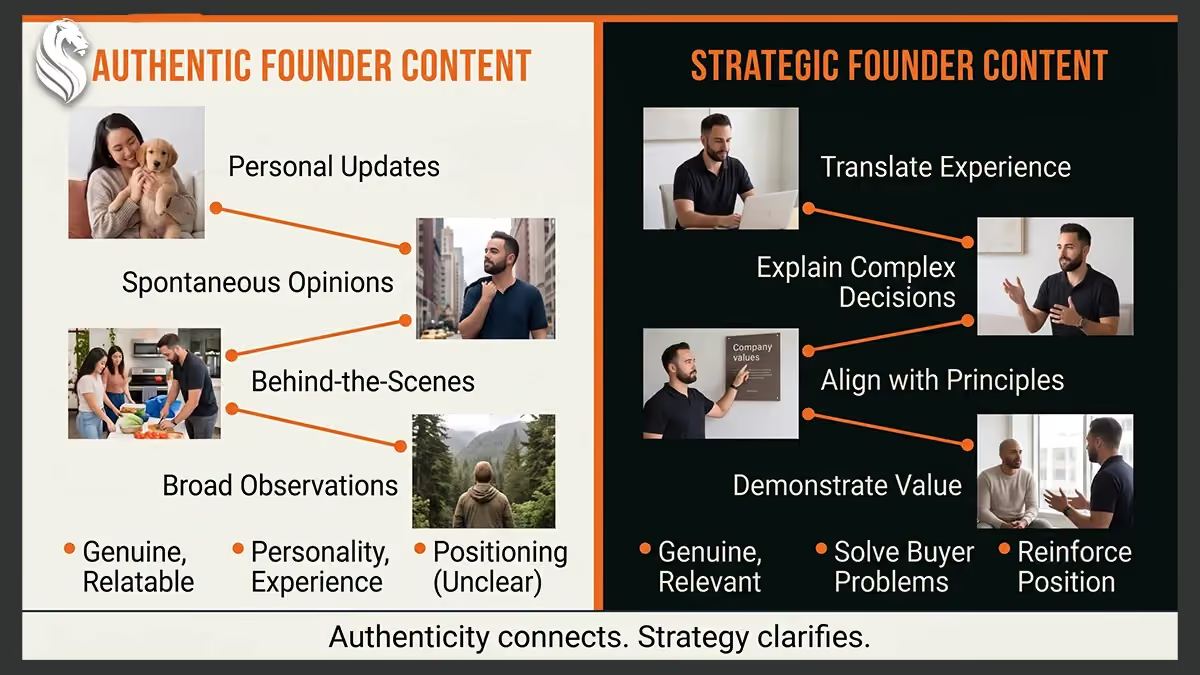
Founder content works best when it feels real and commercially useful at the same time. Authenticity builds trust, but strategy gives that trust direction, relevance, and consistent market value.
Authenticity Alone Does Not Create Positioning
Authentic content can make a founder feel more relatable, but that does not automatically make the business more clearly positioned. A founder can be active online while still saying very little that helps the market understand what the company stands for or why its approach is different.
That is where many businesses get stuck. They confuse showing personality with creating distinction. The content may feel real, but if it does not sharpen the company’s message or support its commercial narrative, it remains visible without becoming strategically useful.
Strategic Content Connects Personal Insight to Business Value
Strategic founder content takes real experience and turns it into something the market can understand and act on. It does not remove personality. It gives that personality a job to do. The goal is not simply to share thoughts, but to reinforce how the business sees problems and delivers outcomes.
This is what turns founder visibility into a positioning asset. The founder’s ideas help explain who the business serves best and what kind of work it is built to do well. That creates stronger alignment between the person speaking and the company behind them.
Random Opinions Weaken Brand Clarity
Not every opinion needs to become content. When founder communication becomes too reactive, too broad, or too disconnected from the company’s actual offering, it can blur the brand rather than strengthen it. The market may notice the founder more, but understand the business less.
Strong founder content stays connected to the company's commercial story. It helps buyers make sense of the brand’s philosophy, standards, and way of working. That discipline matters because attention without clarity rarely leads to stronger trust or better-fit demand.
Conclusion
Founder-led positioning gives a business something crowded markets often strip away, which is a clear and credible reason to be trusted. It helps the right buyers understand not just what the company does but also why its approach carries more weight. That makes the brand easier to remember and harder to confuse with competitors using the same recycled claims. In the right hands, founder-led positioning is a genuine commercial advantage.
Learn how to set a strong founder-led business with Wandering Lion. Book our 15-minute brand & growth scan to see realistic growth and outcomes today!
FAQs
Can founder-led positioning work if the founder is not highly visible?
Founder-led positioning does not require constant posting or a heavy personal brand presence. What matters is that the founder’s thinking shapes the company’s message in a visible way. That can come through articles, interviews, sales material, keynote appearances, or strong opinion pieces published less often but with more substance.
How often should a founder publish content for positioning to work?
Consistency matters more than volume. A founder does not need to be everywhere to build credibility. One strong article or insight-led post each week can do more than daily generic updates. The key is to publish often enough that the market starts recognizing a pattern in how the business thinks and what it stands for.
What kinds of founder content usually strengthen positioning the most?
The strongest founder content usually explains decisions, trade-offs, standards, and market observations. Buyers respond well to content that clarifies why the business works a certain way. That type of content builds trust because it reveals judgment, not just personality or visibility.
What is the risk of doing founder-led positioning badly?
Poor founder-led positioning can make a business look inconsistent, overly personal, or too dependent on one individual. That usually happens when the content is reactive or disconnected from the offer. Instead of building trust, it creates confusion. The goal is to make the founder’s perspective strengthen the brand, not compete with it.

How Founder Leadership Builds Trust and Market Differentiation
Competitors can imitate service descriptions, visual styles, and broad marketing claims. They can’t easily replicate a founder’s experience, judgment, standards, or perspective. When those qualities are translated into clear positioning, they make the business more credible, distinct, and easier for better-fit buyers to trust.

Founder Visibility Works Best When It Strengthens the Business
Founder-led positioning isn’t about posting more often or building the company around one personality. It’s about using the founder’s experience and point of view to clarify how the business thinks, what standards it protects, and why the right customers should trust its approach.
Credibility is harder to copy than marketing language.
Competitors can repeat similar claims, but they can’t reproduce the experience and commercial judgment behind a founder’s perspective.
A clear founder perspective creates a stronger market signal.
Specific opinions about quality, trade-offs, customer fit, and effective execution help the business stand apart from competitors using generic category language.
Premium buyers are looking for judgment, not basic claims.
Higher-value customers often assume technical competence already exists. They pay closer attention to the thinking, standards, and decision-making behind the work.
Authentic content still needs commercial direction.
Founder content should connect personal experience to customer problems, business value, and the company’s wider positioning. Random opinions can generate attention while weakening brand clarity.

Turn your founder perspective into a stronger commercial position.
Book a 15-Minute Brand & Growth Scan to identify how your experience, standards, and point of view can build trust, sharpen your message, and attract better-fit opportunities.
KEEP READING
Explore more







FEEDBACK FROM THE FIELD
No polished scripts. Just the raw operational reality from owners who cleaned up their pipelines and got out of the daily administrative loop.
“When we set out to grow Discmania in the US market, Ryan was a key part of laying that foundation. He helped us cut through the noise & restructured how we told the story of each release, aligning our athlete partnerships with the brand, and building the kind of community touchpoints that turned buyers into fans. The results spoke for themselves. I’d work with him again without hesitation.”



“In 2019, Ryan from Wandering Lion helped transform the Kalamunda Eastern Suns’ presence in the community. He lifted our social profile, drove some of the strongest brand engagement in the league, and helped turn sparse crowds into sellouts. His work also strengthened sponsor interest and raised the overall profile of the club in a way that felt polished, professional, and genuine.”

“Young people who had switched off from school were not going to reconnect because of a campaign headline or a polished message. They needed a genuine reason to turn up again. Wandering Lion brought a strong sense of care to how the story was told. That gave the foundation a clearer public identity.”





“Working with Wandering Lion on the Discmania project was a standout experience. The team’s position work, blended creative vision with strategic execution, was a major asset as we built the Discmania brand globally. The work he produced didn’t just look great. It elevated our brand presence and supported measurable growth across multiple markets.”




“Wandering Lion understood from the outset that the Pacific Hockey League could not simply be another competition with a new name. Their work helped shape a player-first league with the right balance of ambition, fairness, and professionalism. What they brought was not just branding or communication, but real strategic thinking that gave the PHL a stronger and more credible foundation.”

“Authenticity is the centrepiece of all Lajosi Putter customisation works. The brand is reflected in each of our hand-made custom putters. Ryan’s team solidified that identity in our online presence. It led to higher social media engagement from a golfing community who value hand-crafted putters over overly polished ones.”

‹
›
READY TO FIX YOUR GROWTH?
Stop guessing. Get clarity on what's actually slowing your business down.
