

What Brand Foundations Actually Mean
Brand foundations are the core strategic pieces that help a business make sense to the market. They shape how the brand is positioned, what it stands for, who it is trying to reach, and why a customer should care. This is the thinking that gives the brand direction before any campaign, channel, or tactic is added on top.
A business foundation aims for:
- Strong positioning
- Audience clarity
- Clear messaging
- Solid structure
- Commercial problem solving
When these parts are clear, marketing becomes easier to align. Teams can write better ads, build stronger landing pages, and speak more consistently across every touchpoint.
Brand foundations are not just about visual identity. A logo, color palette, or polished website can help a business look more established, but appearance alone does not create clarity. If the message is weak or the positioning is vague, paid media often ends up carrying too much weight.
Strong foundations give the brand a sharper point of view. That makes marketing more convincing, more consistent, and more efficient over time.
How Brand Foundations Improve Paid Media Performance

Paid media works better when the brand behind it is clear. Strong brand foundations help businesses attract the right people and convert interest more efficiently after the click.
Clear Positioning Improves Targeting
Paid media gets stronger when the business knows exactly where it sits in the market. Clear positioning helps shape who the brand is for and why it deserves attention over other options. That gives campaigns a more focused direction from the start.
Without that clarity, targeting often becomes too broad or too reactive. Teams may chase volume instead of relevance, which can lead to wasted spend and weaker lead quality. Strong brand foundations make it easier to build campaigns around a more defined audience and a more believable reason to engage.
Strong Messaging Makes Ads More Compelling
People make fast decisions when they see an ad. If the message is too vague, too generic, or too close to what everyone else is saying, the ad has less chance of earning attention. Strong brand foundations give paid media better raw material to work with.
When messaging is grounded in a clear value proposition, ads become easier to write and easier to understand. The promise is more direct. The tone feels more consistent. The audience can quickly tell what the business offers and why it may be relevant to them. That usually leads to stronger click quality, not just more clicks.
Better Alignment Lifts Conversion Rates
Paid media performance does not depend on the ad alone. It also depends on what happens after someone lands on the page. If the ad says one thing and the landing page says another, potential clients or customers will not understand the offer.
Brand foundations help keep the journey aligned. The same positioning, message, and offer logic can carry through the ad, the page, and the follow-up. That consistency makes the experience feel more trustworthy and easier to act on. It also helps businesses identify where performance issues are really coming from when results start to dip.
Strong Foundations Make Testing More Useful
Testing is a major part of paid media, but not every test is equally valuable. A weak foundation makes testing less efficient. Marketing teams cannot get reliable data on these tests if they do not know which part of their brand’s story resonates more with the target audience.
A stronger foundation gives testing more structure. It becomes easier to compare angles, evaluate what resonates, and build on what works. Instead of constantly guessing, the business can refine campaigns around a clearer strategic base. That usually leads to better learning and more efficient decisions over time.
Consistency Builds Trust Across Touchpoints
Paid media often creates the first interaction someone has with a business. That first impression matters, but it rarely works on its own. Buyers may click an ad, leave, see the brand again later, and only convert after several touchpoints. Consistency plays a big role in making those interactions feel connected.
Strong brand foundations help maintain that consistency across channels. The brand sounds more stable, the offer feels more coherent, and the message becomes easier to remember. That can make paid media more effective over time because the brand is not relying on isolated ads to do all the work alone.
Why Paid Media Breaks Down Without Strong Foundations
Paid media can create momentum quickly, but it also puts pressure on everything underneath it. When the brand lacks clarity, that pressure usually exposes deeper issues rather than solving them.
More Budget Usually Magnifies the Real Problem
Increasing ad spend often feels like the obvious answer when performance is underwhelming. The thinking is simple enough. More budget should create more reach and more opportunities to convert. But if the brand itself is still unclear, higher spend usually sends more people into the same weak experience.
That means the business does not just spend more. It spends more inefficiently. An inconsistent message becomes more expensive once paid media starts driving volume. Instead of solving the problem, budget can amplify it. What looked manageable at a smaller scale starts to show up more clearly in falling efficiency and harder decisions around what to fix next.
Paid Media Can Hide Strategic Weakness for a While
One reason businesses keep pushing into paid media too early is that ads can still produce visible activity, even when the foundation is weak. Campaigns may generate impressions, clicks, form fills, or short-term lifts in traffic. On the surface, that can look like progress.
The problem is that activity is not always the same as traction. Paid media can create movement around a brand that still has not made its value clear. It can temporarily cover up weak messaging or poor market positioning by forcing attention through spend. That is why some businesses keep on optimizing their campaign for an unnecessarily long period. They keep adjusting campaigns without recognising that the deeper issue sits beneath the channel itself.
Teams Often Misdiagnose a Foundation Problem as a Channel Problem
When paid media underperforms, the first response is often tactical. Teams look at audience settings, creative fatigue, bid strategy, or platform changes. Those things do matter, but they are not always the real source of the issue. A campaign is struggling because the brand still lacks the clarity needed to support it.
This is where weak foundations become costly in a different way. They distort diagnosis. Businesses may keep changing campaign variables when the real problem is that the message is too generic, the offer is not clear enough, or the brand does not yet hold a strong place in the buyer’s mind. Paid media becomes frustrating not because the channel is broken, but because it is being asked to carry more than it realistically can.
Signs a Business Should Fix Its Foundation Before Running Ads

Paid media tends to expose brand weakness fast. Before spending on campaigns, a business should check whether the basics are clear enough to support attention, trust, and conversion.
- The Brand Sounds Generic: Brands with broad claims that are also used by their competitors will have a difficult time drawing interest. This can be seen with deeper impressions on their ads, but little to no clicks.
- The Offer Takes Too Long To Explain: A clear offer should make sense quickly. When teams need several sentences to explain what the business does, that confusion usually affects sales conversations. Paid media rarely performs well when clarity arrives too late.
- Different Teams Describe The Business Differently: If sales, marketing, leadership, and delivery teams all describe the company differently, the foundation is probably not yet solid. That kind of inconsistency sends mixed signals in the market and makes it harder for paid media to present a single, strong, believable message.
- Traffic Arrives, But Conversion Stays Weak: Low conversion rates are not always a media buying problem. Sometimes the audience is clicking, but the brand has not made a convincing case once they land. That often points to unclear positioning, weak messaging, or a poor match between the ad and the actual offer.
- The Business Keeps Changing Its Message: Constantly changing the message and target audience is a sign that the brand lacks strategic clarity. Businesses are still finding a solid foundation that translates to conversions.
- Price Becomes The Main Way To Compete: When a brand cannot clearly express why it is different, paid media often pushes it toward discounting or price-based hooks just to win attention. That may generate clicks, but it usually leads to weaker margins and a less stable position over time.
Conclusion
Paid media can help a business grow, but it needs a solid strategy to be efficient. Strong brand foundations make it easier to attract genuine interest that turns into conversions. Without a solid brand message, business will waste their marketing budget on ads their audience ignores. Businesses that fix the foundation first usually give paid media a far better chance to perform well and scale sustainably.
Wandering Lions helps you create a solid brand foundation to achieve measurable commercial outcomes. Book a 15-minute brand & growth scan today!
FAQs
How Can A Business Test Its Brand Foundation?
A business can test its foundation by checking whether buyers quickly understand the offer.. Sales calls, landing page feedback, and message testing with small organic or low-budget campaigns can reveal confusion early. That is often cheaper than finding out through a larger paid media budget.
Does A Rebrand Automatically Improve Paid Media Results?
Not always. A rebrand can improve paid media performance if it addresses underlying issues such as weak positioning, unclear messaging, or a confusing offer. But if the business only changes visuals and leaves the strategy untouched, campaign results may not improve much. Better design helps, but clarity usually has the bigger commercial impact.
When Is A Business Actually Ready To Scale Paid Media?
A business is usually more ready to scale when its core message is stable, conversion paths are working, and the offer already makes sense to the right audience. Good paid media scaling normally follows proof, not hope. Once a business can convert attention consistently, more spend has a stronger chance of producing efficient growth.

Why Better Foundations Produce Better Paid Media Results
Paid media works best when the market can quickly understand your business, trust your offer, and see why it’s relevant. Clear positioning improves targeting, stronger messaging makes campaigns more compelling, and a connected customer journey gives more clicks a realistic chance of becoming qualified enquiries.

Brand First. Paid Media Second.
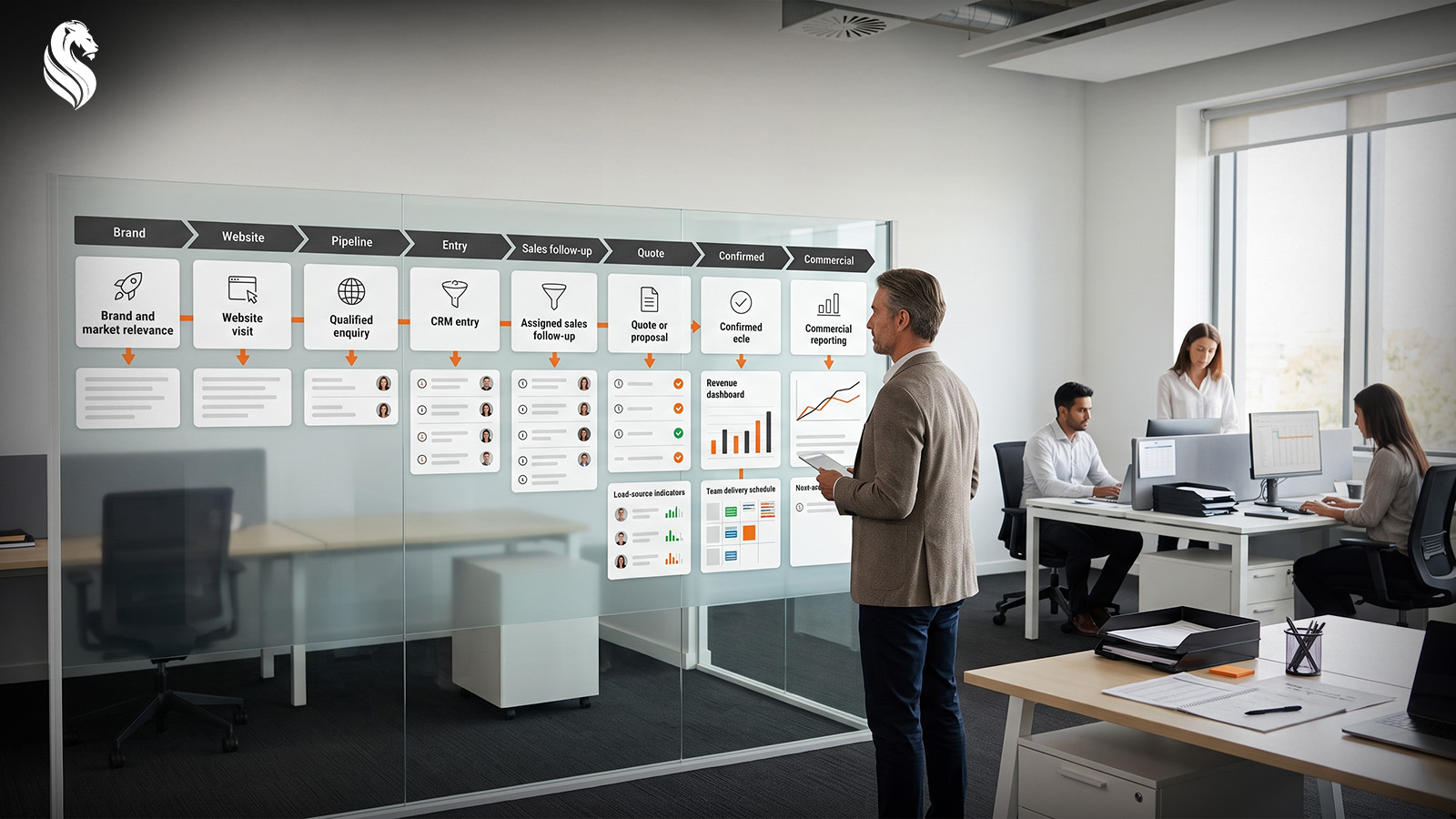
Advertising amplifies what’s already there. When the brand, message, offer, website, and customer journey are clear, paid media can scale a working commercial system. When they aren’t, additional spend usually exposes the gaps and makes inefficiency more expensive.
Clear positioning improves targeting.
When you know exactly who the business serves, what problem it solves, and why it’s different, campaigns can reach better-fit audiences with greater precision.
Strong messaging makes advertising more compelling.
Clear, commercially relevant messaging helps the right customers recognise their problem, understand the offer, and see a reason to act.
Better alignment lifts conversion rates.
Campaign performance improves when the ad, landing page, offer, proof, lead capture process, and sales follow-up all support the same promise.
Fix foundation problems before increasing spend.
Weak conversion, inconsistent enquiries, unclear offers, and poor follow-up are signs the wider growth system needs attention before paid media is scaled.

Before you increase your ad spend, find out what needs to be fixed first.
Book a 15-Minute Brand & Growth Scan to identify the positioning, customer journey, conversion, and system issues that could be limiting your results.
KEEP READING
Explore more






FEEDBACK FROM THE FIELD
No polished scripts. Just the raw operational reality from owners who cleaned up their pipelines and got out of the daily administrative loop.
“When we set out to grow Discmania in the US market, Ryan was a key part of laying that foundation. He helped us cut through the noise & restructured how we told the story of each release, aligning our athlete partnerships with the brand, and building the kind of community touchpoints that turned buyers into fans. The results spoke for themselves. I’d work with him again without hesitation.”



“In 2019, Ryan from Wandering Lion helped transform the Kalamunda Eastern Suns’ presence in the community. He lifted our social profile, drove some of the strongest brand engagement in the league, and helped turn sparse crowds into sellouts. His work also strengthened sponsor interest and raised the overall profile of the club in a way that felt polished, professional, and genuine.”
“Young people who had switched off from school were not going to reconnect because of a campaign headline or a polished message. They needed a genuine reason to turn up again. Wandering Lion brought a strong sense of care to how the story was told. That gave the foundation a clearer public identity.”





“Working with Wandering Lion on the Discmania project was a standout experience. The team’s position work, blended creative vision with strategic execution, was a major asset as we built the Discmania brand globally. The work he produced didn’t just look great. It elevated our brand presence and supported measurable growth across multiple markets.”




“Wandering Lion understood from the outset that the Pacific Hockey League could not simply be another competition with a new name. Their work helped shape a player-first league with the right balance of ambition, fairness, and professionalism. What they brought was not just branding or communication, but real strategic thinking that gave the PHL a stronger and more credible foundation.”

“Authenticity is the centrepiece of all Lajosi Putter customisation works. The brand is reflected in each of our hand-made custom putters. Ryan’s team solidified that identity in our online presence. It led to higher social media engagement from a golfing community who value hand-crafted putters over overly polished ones.”

‹
›
READY TO FIX YOUR GROWTH?
Stop guessing. Get clarity on what's actually slowing your business down.
