

What Growth Foundations Actually Mean
Growth foundations are the core elements that support consistent business growth over time. They are not the campaigns, ads, or content a business publishes. They are the underlying structure that makes those activities more focused, measurable, and commercially useful.

In practice, a good growth foundation has a strong understanding of what drives revenue and finds a clear position for the brand. Without strong growth foundations, even good marketing can feel unpredictable. A business may stay active, but activity alone does not create momentum. Strong foundations make growth easier to manage by reducing confusion and providing the business with a more stable base for scaling.
Why Growth Foundations Matter More Than Marketing Tactics
Tactics can attract attention, but they cannot fix a business that lacks clarity beneath the surface. Many growth problems are not really channel problems. They come from unclear positioning, weak systems, poor reporting, or a gap between marketing activity and commercial priorities.
This is why growth foundations matter more than tactics. Marketing tactics sit on top of the business, but foundations shape how effectively those tactics can perform. More campaign activity often just puts extra pressure on problems that were already there.
Strong growth foundations make tactics more useful by giving them direction and context. They help businesses spend more carefully, execute more consistently, and make better decisions once results start coming in. Without that structure, even smart marketing can become expensive activity without lasting momentum.
The Structural Elements Behind Strong Growth Foundations
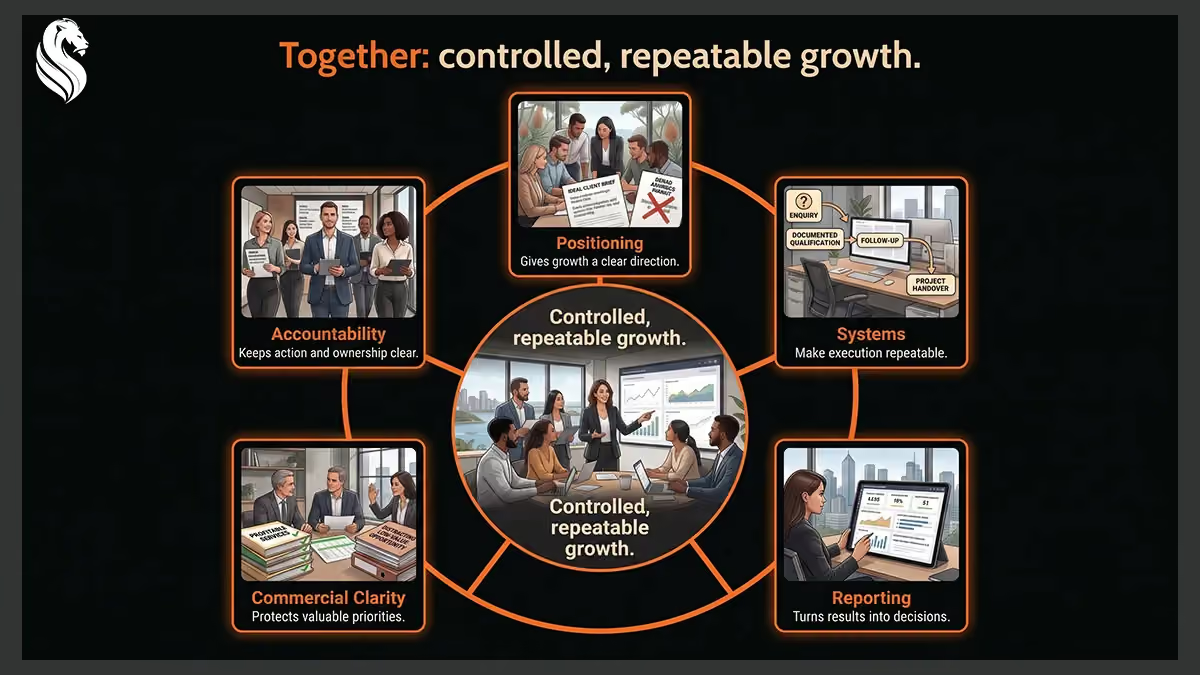
Strong growth foundations rely on more than good ideas. They need aligned positioning, repeatable systems, useful reporting, a commercial focus, and clear accountability so the business can grow with consistent control.
Clear Positioning That Gives Growth Direction
Positioning gives growth activity a clear point of focus. It shapes who the business is for, what problem it solves, and why it deserves attention over other options. That clarity affects channel performance because targeting and messaging become more precise. Teams are not left guessing what to emphasise or who they are trying to reach. When positioning is weak, marketing often drifts into broad claims and campaigns that attract attention without drawing in the right buyers.
Systems That Support Consistent Execution
Growth becomes harder to sustain when execution depends on memory, individual effort, or constant follow-up. Strong systems create consistency by giving teams a clearer way to plan, deliver, review, and improve work over time. Operational processes matter because they reduce missed steps and help maintain momentum by not relying on one person to hold everything together. Good systems also reduce friction across teams and suppliers.
Reporting That Helps the Business Make Better Decisions
Useful reporting does more than display numbers on a dashboard. It helps the business understand what needs attention next. Strong reporting connects activity to commercial outcomes, so leadership can see how performance is affecting revenue quality or sales efficiency. That is far more valuable than polished updates built to reassure people.
Commercial Clarity That Keeps Growth Grounded
A business can grow efficiently when it knows what drives value to its clients or customers. Commercial clarity means understanding which offers contribute to stronger margins over time. That makes prioritisation easier because decisions are based on commercial weight instead of noise. It also helps teams resist vanity metrics that does not benefit the business. Lack of clarity will prevent a business from achieving growth that matters.
Decision-Making Structure and Accountability
Growth slows down when decisions are unclear, and responsibility is spread too thin. Teams stay busy, but progress becomes uneven when nobody clearly owns outcomes, priorities, or next steps. Accountability improves speed because people know what they are responsible for and where decisions need to sit. It also improves follow-through, since actions are less likely to stall between meetings or functions. Over time, that structure creates more consistent performance because governance supports steadier execution, faster correction, and clearer ownership across the growth function.
Signs a Business Has Weak Growth Foundations
Weak growth foundations usually show up before a business has a serious performance problem. The signs often appear in daily operations and constant effort that never seems to build real momentum.
- Marketing activity results are hard to repeat. One campaign can work for a while, then performance drops without anyone clearly understanding why.
- Teams spend a lot of time reacting instead of working to a clear plan. Priorities keep shifting, which makes execution feel scattered and hard to sustain.
- Messaging changes often and still fails to land clearly with the right audience. That usually points to weak positioning rather than a simple channel problem.
- Reporting creates visibility at a surface level, but not much real understanding. The business can see numbers moving, yet still struggles to connect them to commercial decisions.
- Different people own parts of growth, but no one fully owns the outcome. That slows decisions down and makes it easier for work to stall between teams or suppliers.
- Growth efforts attract the wrong audience. Conversion remains inconsistent despite the increasing leads.
- More budget gets added when performance slips, but the same issues keep returning. That is often a sign the business is trying to scale activity before fixing the structure underneath it.
- Internal effort depends too heavily on memory, individual initiative, or constant follow-up. When systems are weak, progress becomes harder to maintain once the business gets busier.
What Strong Growth Foundations Look Like in Practice
Strong growth foundations do not just exist in strategy documents. Its foundation comes from the decisions made, responses to pressure, alignment among departments, and the ability to spot a problem.
The Business Knows What to Say No To
Strong foundations make prioritisation clearer. The business does not chase every channel, audience, or opportunity that appears promising on the surface. It has enough clarity to reject distractions, protect focus, and invest in work that fits its commercial direction. That discipline is often one of the clearest signs that the foundation underneath growth is strong.
Execution Does Not Fall Apart Under Pressure
A business with strong foundations can handle busy periods without everything becoming reactive. Work still moves, decisions still get made, and the team does not need to keep rebuilding momentum every time priorities change. Pressure reveals weak structure very quickly, so one of the best signs of a strong foundation is that execution remains stable when the pace increases.
Different Functions Pull In the Same Direction
Growth foundations are stronger when marketing, sales, leadership, and delivery are not operating with different assumptions. The business shares a clearer understanding of what success should look like. That alignment reduces internal friction and makes growth easier to sustain because effort is not being diluted across conflicting priorities.
Problems Become Visible Earlier
Businesses can immediately and easily find issues with their performance when it has a solid growth foundation. This is due to the reporting and ownership of the problem becoming transparent as the business scales. The line of accountability for issues becomes clearer as a business increases its workforce.
Growth Feels More Deliberate Than Reactive
One of the clearest signs of a strong foundation is that growth stops feeling random. The business is not constantly switching direction, overcorrecting, or chasing short-term fixes just to create movement. Instead, decisions feel more deliberate, execution has more continuity, and progress builds through consistency rather than constant bursts of activity.
Conclusion
Good growth foundations are what turn effort into something the business can actually build on. When positioning, systems, reporting, commercial clarity, and accountability are working together, business growth becomes sustainable. Businesses with solid foundations create better decisions and more reliable momentum over time. That is what makes scaling foundations such an important part of sustainable performance, especially for businesses that want to scale without losing clarity or control.
Book Wandering Lion’s 15-minute brand & growth scan to integrate a sustainable scaling foundation to your business. We have years of experience helping businesses and organizations achieve a sustainable growth mindset.
FAQs
Can a business have strong marketing but weak growth foundations?
It happens more often than many teams realise. Business struggles with their campaign when their structural elements, like their positioning and reporting, are not aligned. Strong execution can create short-term wins, but weak growth foundations usually make those wins harder to repeat over time.
How do growth foundations affect sales, not just marketing?
Growth foundations help sales by improving lead quality, message consistency, and internal clarity around what the business is actually trying to sell. When positioning is stronger and commercial priorities are clearer, sales conversations become more focused and less reactive. That usually leads to better qualification, smoother handovers, and more confidence across the pipeline.
Should a business fix its growth foundations before increasing budget?
In many cases, yes. More spending can increase reach, but it can also magnify weaknesses that already exist in targeting, systems, reporting, or accountability. Fixing the foundation first usually helps a business use budget more efficiently, make better decisions faster, and avoid spending more just to expose the same structural problems.
Are growth foundations only important for larger businesses?
No. Smaller businesses often feel the impact of weak growth foundations even faster because they have less room for wasted effort, unclear ownership, or poor decision-making. Clear positioning, useful reporting, and better systems matter early because they help the business grow with more control instead of relying on guesswork as complexity starts to increase.

The Five Elements of a Strong Growth Foundation
A strong growth foundation gives every marketing, sales, and operational decision clearer direction. Positioning defines who the business should attract, systems support consistent execution, reporting connects activity to outcomes, commercial clarity protects profitable priorities, and accountability keeps progress moving.

Strong Growth Is Built on Structure, Not More Activity
Growth becomes more predictable when the business has clarity beneath its marketing. Before adding more campaigns, channels, or budget, the business needs a clear position, repeatable processes, commercially useful reporting, and defined ownership of outcomes.
Clear positioning gives growth direction.
The business needs to know who it serves, what problem it solves, and why the right customers should choose it. That clarity strengthens targeting, messaging, sales conversations, and channel performance.
Repeatable systems reduce reactive work.
Growth becomes difficult to sustain when execution depends on memory, individual effort, or constant owner involvement. Clear systems help teams deliver consistently without rebuilding the process every time the business gets busy.
Useful reporting improves commercial decisions.
Strong reporting should explain more than what happened. It should connect marketing and sales activity to lead quality, conversion, revenue, efficiency, and the next decision the business needs to make.
Clear accountability keeps growth moving.
Progress slows when responsibility is fragmented across teams, suppliers, or departments. Defined ownership makes decisions faster, improves follow-through, and reveals problems before they become expensive.

Find out what is slowing growth before adding more activity.
Book a 15-Minute Brand & Growth Scan to identify the positioning, systems, customer journey, reporting, and accountability gaps limiting your business.
KEEP READING
Explore more







FEEDBACK FROM THE FIELD
No polished scripts. Just the raw operational reality from owners who cleaned up their pipelines and got out of the daily administrative loop.
“When we set out to grow Discmania in the US market, Ryan was a key part of laying that foundation. He helped us cut through the noise & restructured how we told the story of each release, aligning our athlete partnerships with the brand, and building the kind of community touchpoints that turned buyers into fans. The results spoke for themselves. I’d work with him again without hesitation.”



“In 2019, Ryan from Wandering Lion helped transform the Kalamunda Eastern Suns’ presence in the community. He lifted our social profile, drove some of the strongest brand engagement in the league, and helped turn sparse crowds into sellouts. His work also strengthened sponsor interest and raised the overall profile of the club in a way that felt polished, professional, and genuine.”

“Young people who had switched off from school were not going to reconnect because of a campaign headline or a polished message. They needed a genuine reason to turn up again. Wandering Lion brought a strong sense of care to how the story was told. That gave the foundation a clearer public identity.”





“Working with Wandering Lion on the Discmania project was a standout experience. The team’s position work, blended creative vision with strategic execution, was a major asset as we built the Discmania brand globally. The work he produced didn’t just look great. It elevated our brand presence and supported measurable growth across multiple markets.”




“Wandering Lion understood from the outset that the Pacific Hockey League could not simply be another competition with a new name. Their work helped shape a player-first league with the right balance of ambition, fairness, and professionalism. What they brought was not just branding or communication, but real strategic thinking that gave the PHL a stronger and more credible foundation.”

“Authenticity is the centrepiece of all Lajosi Putter customisation works. The brand is reflected in each of our hand-made custom putters. Ryan’s team solidified that identity in our online presence. It led to higher social media engagement from a golfing community who value hand-crafted putters over overly polished ones.”

‹
›
READY TO FIX YOUR GROWTH?
Stop guessing. Get clarity on what's actually slowing your business down.
